The Salt Lake City Issue
Faith, Hope, and What Lasts
A Stroll through Gilgal Sculpture Garden
It's 10AM, and Andrew’s Tesla’s GPS has just announced the end of our journey to Gilgal Sculpture Garden. Swinging my door open, I breathe deeply. The morning is picturesque — the sky astonishingly blue in the day’s early warmth, air cool and bright.
As the doors shut with satisfying thuds, Salt Lake suburbia sparkles out of a storybook. The sprinklers only barely water pavement, literal white picket fences framing wide green lawns that present to us stereotypically perfect nuclear family homes lavishly decorated with flora, the block width of each announcing wealth with privileged nonchalance. (But also, maybe I’m just from California.)
It is not surprising to think that Thomas Battersby Child Jr. once lived here. The year is 1945, and Mr. Child had it all — a loving wife (that he allegedly did dirty; people say that she was much more lively than her bust in the garden conveys), four children, a bishopship in the Mormon church, and retirement from a successful masonry career — by the time he started building sculptures in his backyard for his final great passion project.
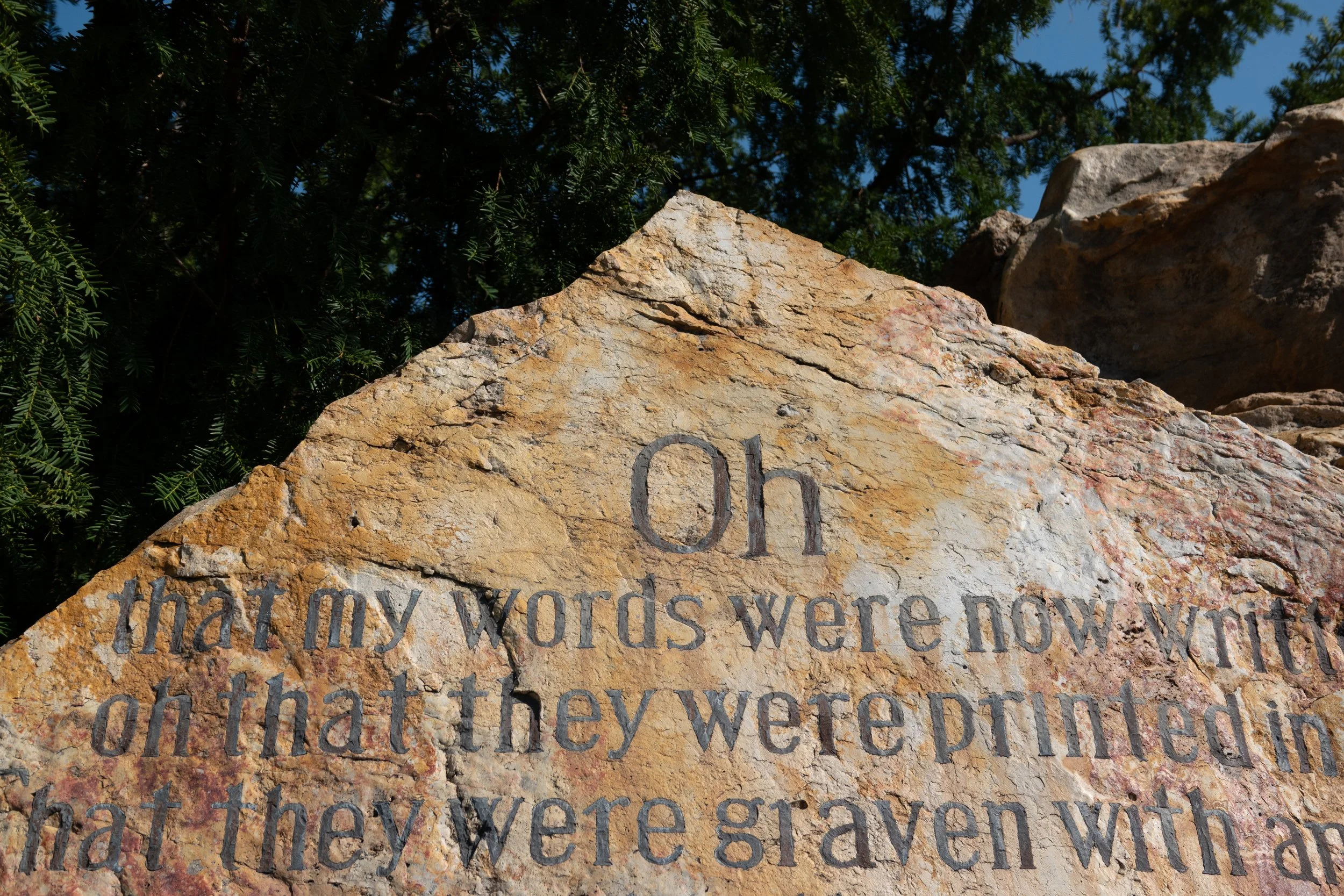
1. the altar:
“Father, forgive them, for they know not what they do.”
This, I instantly recognize to be Jesus' prayer to God after being crucified, waiting for death in agony — my many years of falling asleep during reluctantly attended church services haven’t been entirely for naught. In a similar vein, I’m also reminded of the many times I’ve read lengthy passages of instructions for how to build a tabernacle, a temple in the Bible. How to ask –- no, beg — for forgiveness. In a way, it's a forgiveness that has already been granted — the Christian God must be magnanimous. In a way, it is a forgiveness we are never to accept — the Christian God demands a lifetime, an eternity, spent in His debt. Every kindness is his grace, every misfortune is a lesson, a punishment, deserved. Teach us to pray, to yearn in a way that is desperate and acceptable.
2. the riddle:
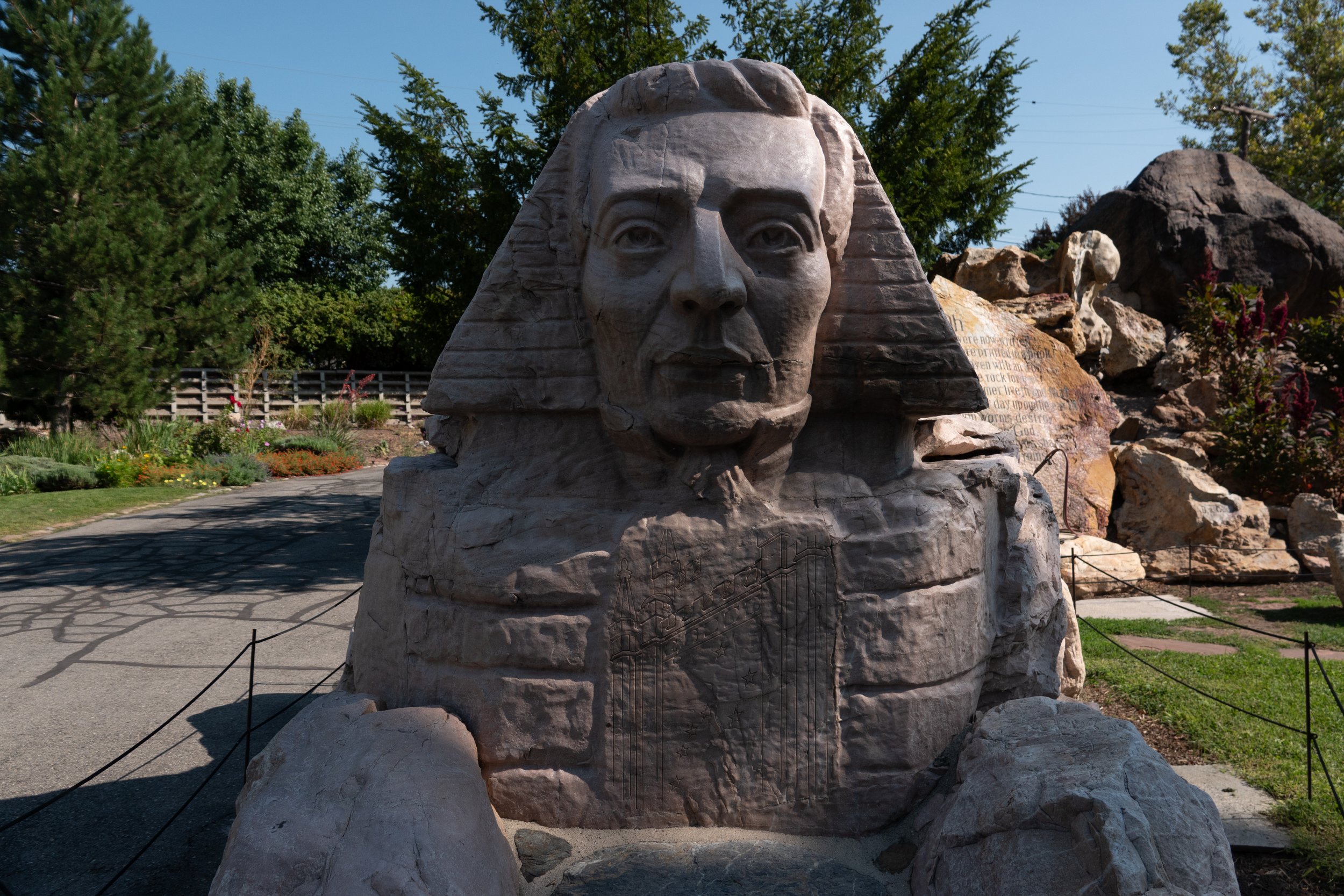
“The sphynx is drowsy, Her wings are furled, Her ear is heavy, She broods on the world, Who’ll tell me her secret, The ages have kept? I awaited the seer, While they slumbered and slept.”
Perhaps ironically, I spend the least amount of time with the garden’s iconic bust of Mormon founder and forefather Joseph Smith as an Egyptian sphinx. After all, religious confusion is something I know best. Everything is a riddle if you stare at it long enough, and humanity has been looking for purpose, comfort, and origins, for a very long time. Our oldest, most well-preserved, and continually retold stories are theories of something bigger than an individual, bigger than a collective, bigger than comprehension or confirmation. I know that the longer I stare at this man, this alleged prophet, perhaps my fixation will curdle into mishappen belief, too.
3. the shadow:
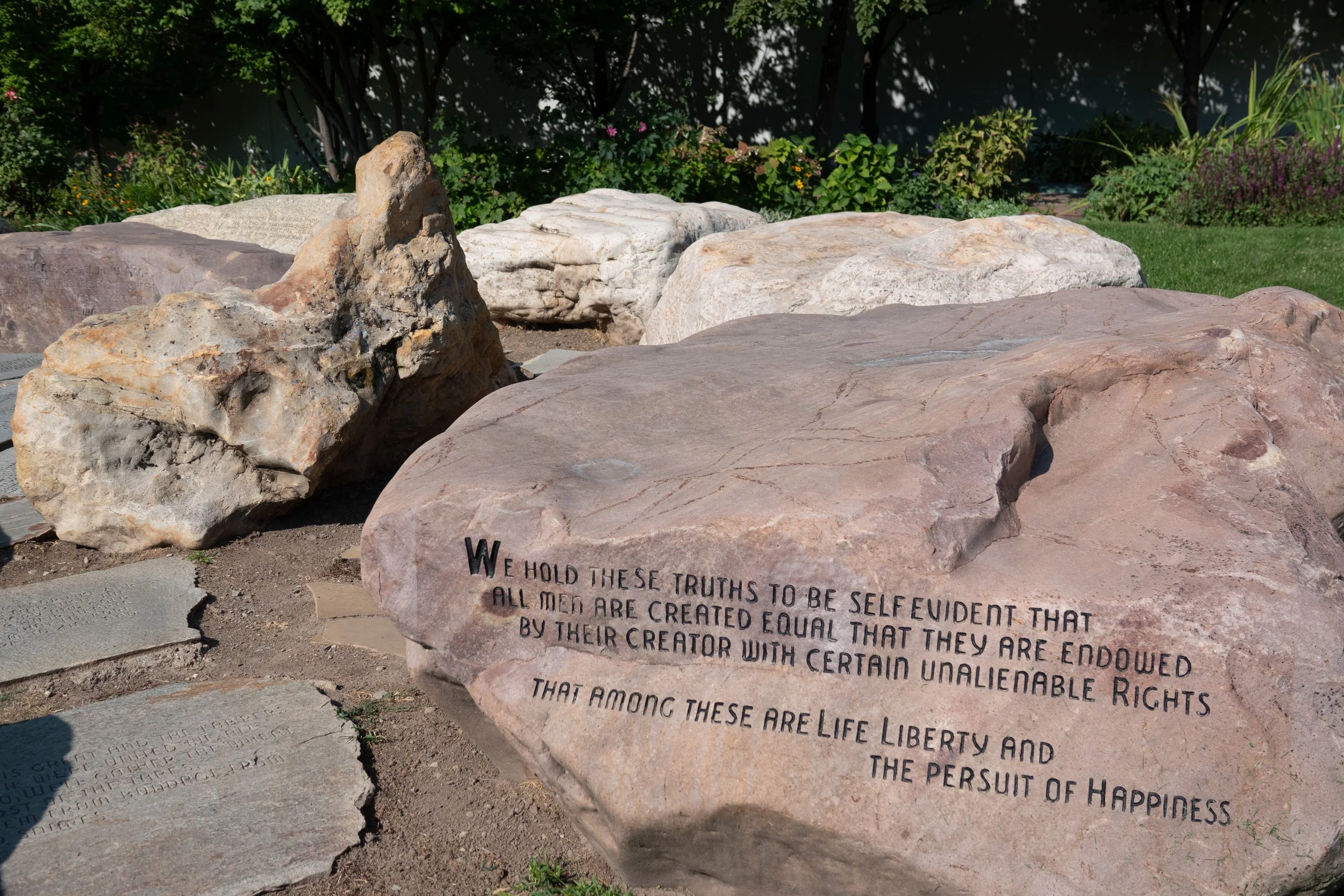
“we hold these truths to be self evident … endowed by their creator with certain unalienable rights…”
The words on the path are meant to be stepped on, and a few have been worn down into mere impressions. At first, it's unclear if this memorial was created in Child’s honor, or if Child himself set this up. Low boulders interrupt the walkway, creating a meandering maze in the shadow of a well-defined, muscular giant, with an unrefined jagged boulder for a head. Child’s patriotism is evident here, proving once again American devotion marries Christ and Country together. These are Child’s inspirations, and this tangle of inscribed rocks are a kind of accreditation, acknowledgement, remembering — another unrepayable debt to our forefathers. Like many of the scriptures in the garden, there are no explicit sources cited. At first, this is a bit alienating — I feel left out in what I do not know. But in retrospect, the beauty of this choice is that all the words are declared equal. Instead of seeking legitimacy from their source texts, they are presented as a mosaicked, singular bare truth, each held equal its inclusion, in the face of the garden’s sun and shadow.
4. the greatest of these is love:
“All in Earth’s fleeting state as symbol is still meant; Here the inadequate grows to fulfilment; Here is wrought the inscrutable, to silence that awes us; Love eternal immutable, on ever on draws us.”
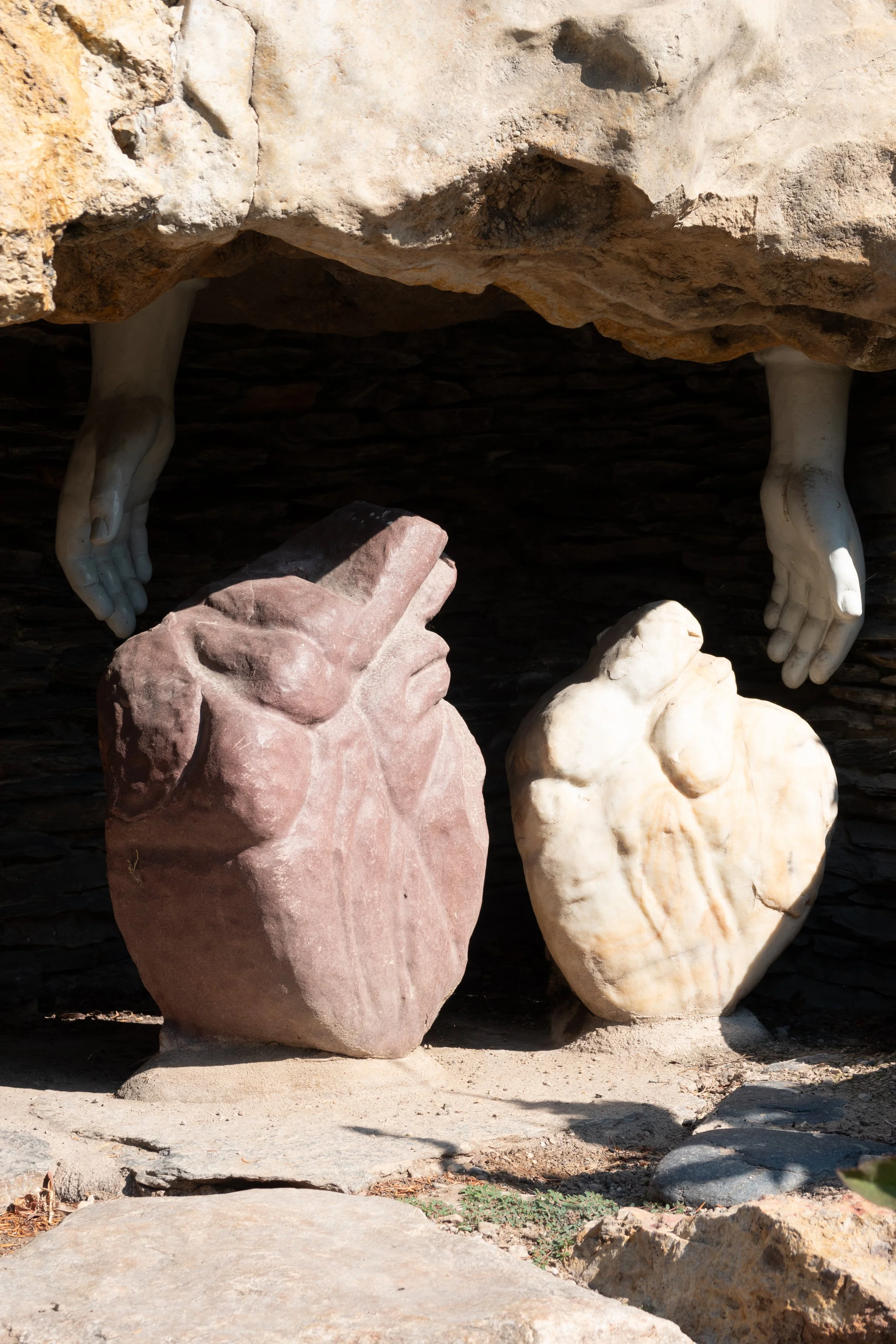
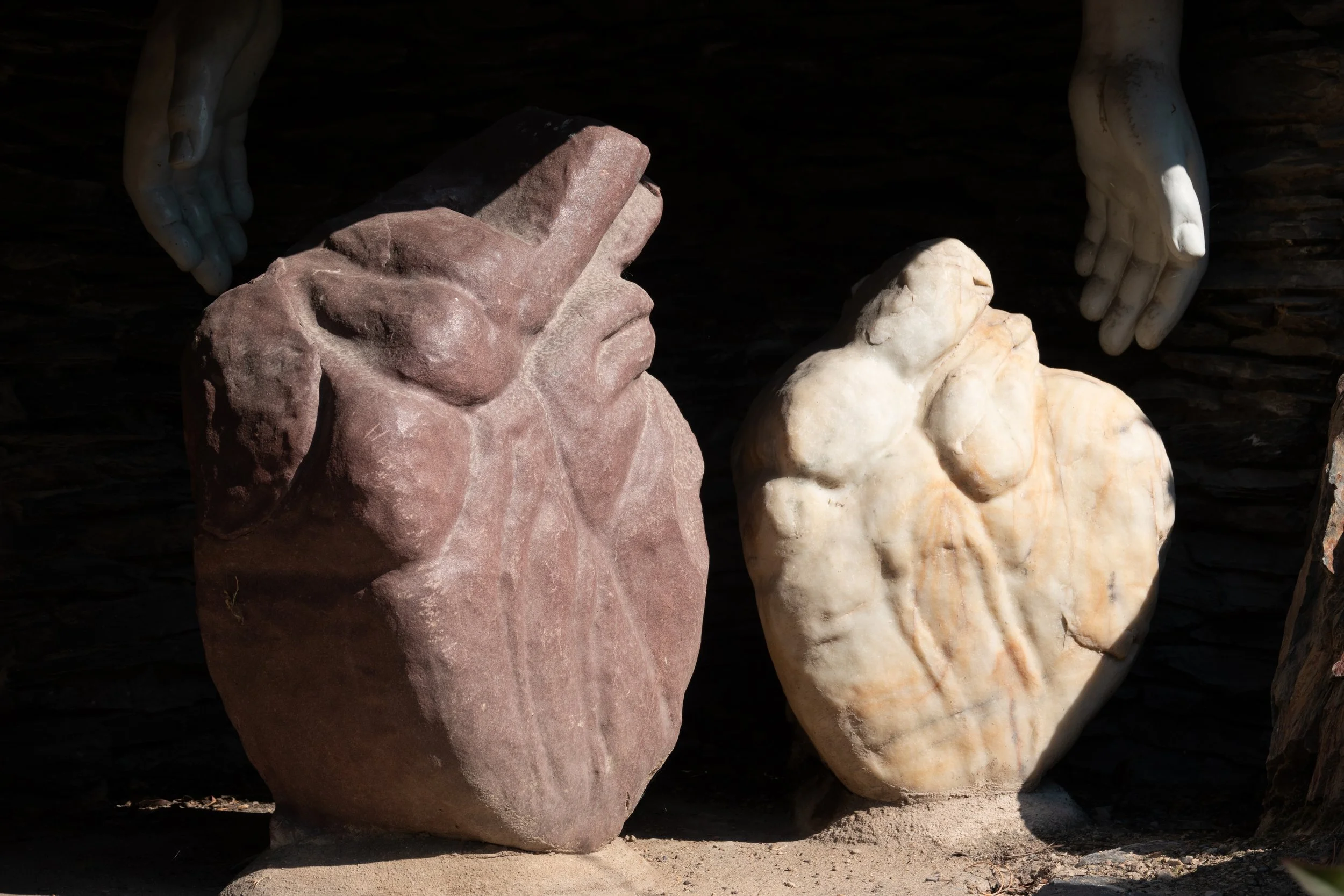
Two slightly cupped palms from above guide two hearts together, one a dusty ripe red, and the other a smaller pale white. This instantly is my favorite piece in the garden. I believe there is often poetry in action, and I cannot imagine a more poignant one than finding a rock in Booneyville, Utah, taking it home, and unearthing the heart in it. Creation, and becoming — transformation is engagement with potential, a reckless kind of seeing desire through. It is somehow both holy and profane.
Myriam, my Mormon friend who attends BYU, actually recommended against coming here. Throughout our grade school years, the two of us grappled with our respective faiths and the flaws of our religious institutions. It’s been over a decade, and I can’t say either of us are any closer to answers. “I’ve heard it's boring”, she said. Looking at the weapons, the dismembered giant, the giant birdhouse, the large stone house — I recognize them for the symbols they are, but they fail to come to life.
In the corner of the garden, I spot a girl scrolling on her phone. Curious, I approach. Morgan had come to Gilgal Garden to enjoy the flora, on break from her shift at Trader Joe's. I nod, smiling a little. I had read online prior to coming about the persistent conservation efforts that have gone and continue to go into restoring this place into the lush and well-maintained hidden little green space. It makes me happy that their efforts have also, in their own way, left its mark and shapes how the garden is experienced today. I find myself acutely aware that the Gilgal Sculpture Garden is not just Child’s creation — it is a community effort. It is constantly in a process of reinvention as it continually finds meaning and purpose over time.
“It's pretty,” she shrugs, “Peaceful.”
“It is kind of hidden,” she admits. “a little strange, too.”
When I ask her, perhaps too bluntly, if she's Mormon, she shakes her head. “No, and I'm lucky that my family accepts it.” She depicts Salt Lake City as a liberal exclamation point in the middle of a very conservative state, and that for questioning young people who feel that the Latter Day Saints Church is behind in modernizing and reflecting their more progressive views, political differences are causing more nuclear family dissociation as the new generation strays away from Mormonism.
I hand her a lychee jelly from my tote bag, a thank you, and another smile, before walking away.
5. man with the brick pants:
“who reads me in ashes is my son in wishes”
I find my Caravan group loitering in the shade in front of a sculpture of a shorter stout man with brick pants, standing in front of the LDS Tenth Ward and a wall of masonry tools — Thomas Child Jr himself. The others shoot the breeze. They’ve been done for awhile, I know — further evidence of how the spiritual aspects of the garden are, in a way, quite exclusionary. Art may not need to explain itself, but it is also clear that Child created this place with the Christian demographic in mind.
“If you want to be brought down to earth in your thinking and studying, try to make your thoughts express themselves with your hands.”
Gilgal, this place’s namesake, is after the Biblical location where Joshua ordered the Israelites to place twelve stones as a memorial for all that God had done. If homage was the purpose, I suppose the garden is an exhibition — and what would church be without a bit of that? But what is heartening to see is how one man’s conviction calcified into undeniable vision. How the remnants of one man’s passion blooms, inspires reinvention, lasts.
————————————————————————-
Words: Audrey Sioeng
Photos: Inseo Yang
Design: Emma Cao
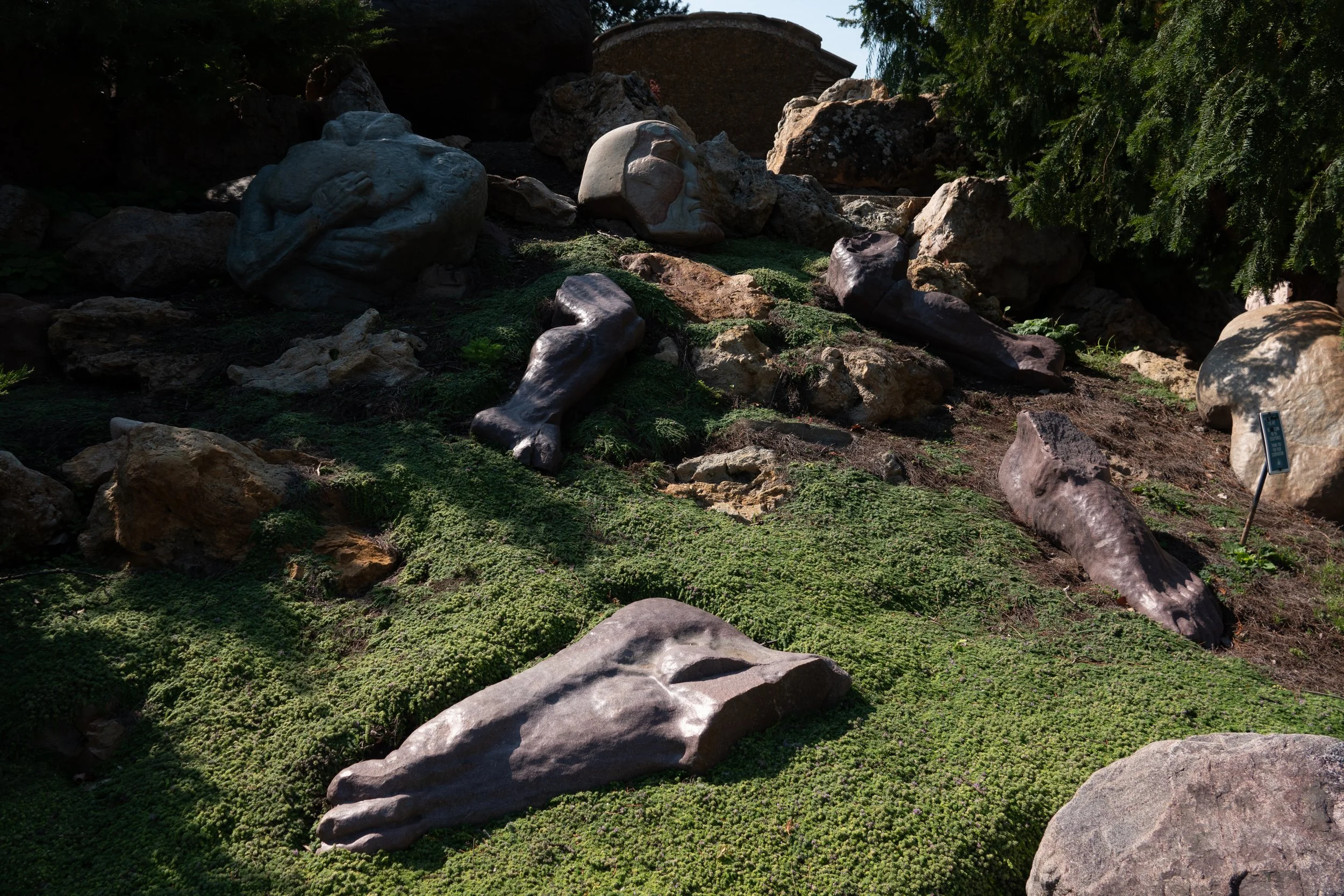
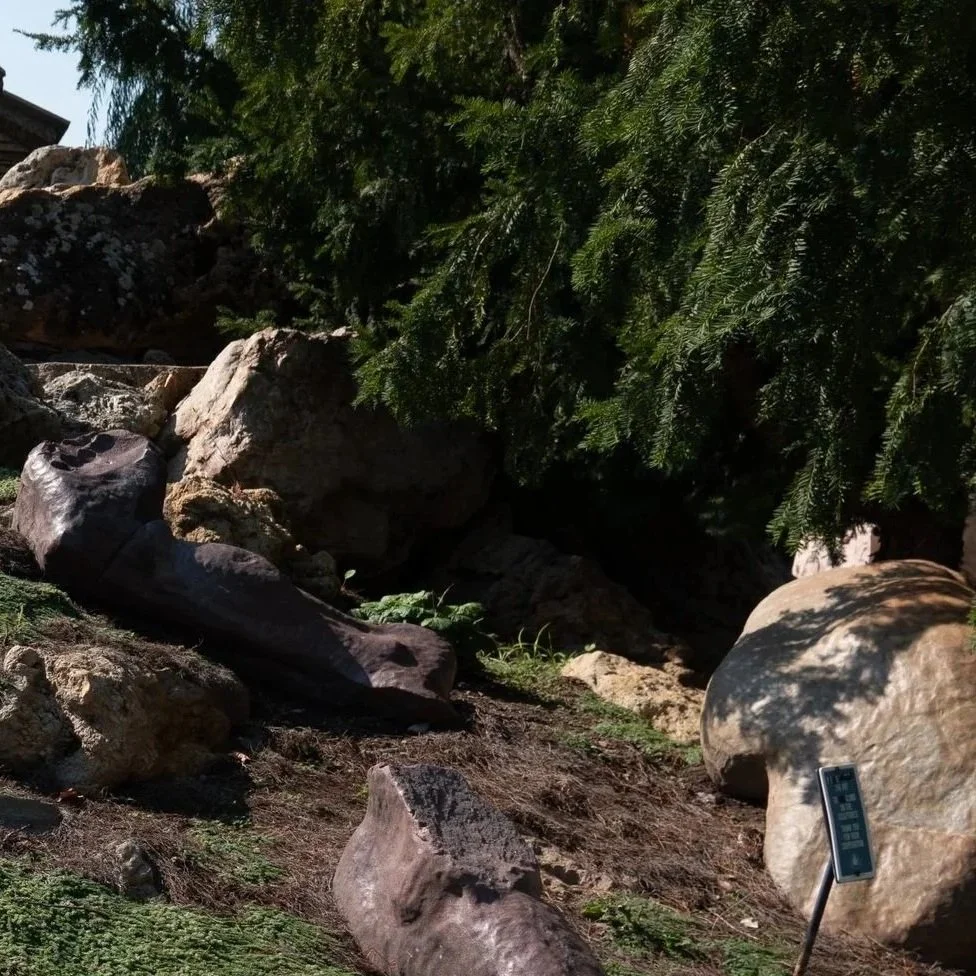
As the short path opens up into the garden, our group instantly fans out. I take my time to first regard the altar replica on my right. Surrounding it are many flat rocks with writing — scripture? — on them. I inspect the smudged, weathered words, squinting against the sunlight, rocking onto my toes and heels, and craning my neck to get a better view, half expecting an explanation to materialize on them as if this is an art exhibition or museum. Is it?
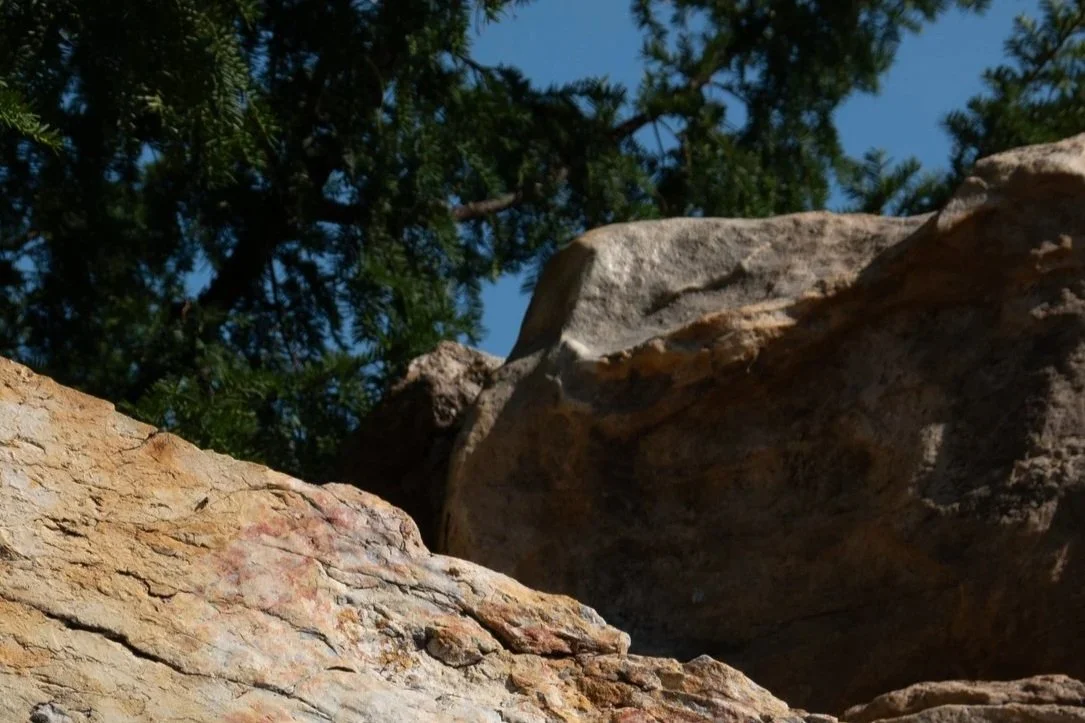
2.5. the playground:
"Truly I tell you, unless you change and become like little children, you will never enter the kingdom of heaven"
“count your many blessings
name them one by one
count your many blessings
see what God hath done”
“Look, Dad,” a little girl squeals, “big tall climbing rocks!”