Home. Hogar. 집
Home to me looks like a long one-story, peach-colored house with worn down, grey windows, and paint peeling from its old age. Home to me also looks like my dad lying on our brown, leather sofa, seat reclined, with a can of Coors Light in his left hand and a remote on his right, watching the Dodgers Game. Home to me also looks like my military grandpa wiping every corner of the house with his white tanktop he makeshifted into a rag, sweeping our backyard, and reading his stack of Japanese political books at 5 am everyday.
Home to me smells like the roasted onions integrated in every homemade meal my dad would cook. Home to me also smells like the toxic, smokey aroma of cigarettes and the sour, bitter scent of rice wine. Home to me sometimes smells like my Coach Floral Eau De perfume that I would spray on my wrists and neck for special occasions like my orchestra concerts and winter formals. Home to me also sometimes smells like the wood and warmth of the pages of a new book.
Home to me tastes like the bitter, savory Ginseng tea my grandpa would boil in his crockpot he would cautiously safekeep in his room. Home to me tastes like the sweet gala apples my dad would attentively shave the skins of and slice into perfectly angular pieces every morning, reminding me that an apple a day keeps the doctors away. Home to me also tastes like the sweet and salty soybean paste that goes in my dad’s specialty soup and what I dip my slices of pork belly and garlic in.
Home to me sounds like the Korean man on KBS news reporting the political climate in a thick, serious, and monotone manner. Home to me sounds like Christian worship hillsongs—like Hosanna and Ain’t No Mountain High Enough—with soft strums of the guitar, gradual crescendo of the drums, and a clean, soulful singer. Home to me also sounds like the dramatic OSTs of Korean Dramas all about heartbreak that I never really understood, but enjoyed the melodies of. Home to me also sounds like my grandpa cursing the Korean government, then the Japanese, and then the American one during every car ride we shared.
I was somehow able to articulate how a home looks, smells, tastes, and sounds. But how a home feels, seems to transcend the limitations of the human language. Home to me feels like an experience you can’t explain with words. Home can be a person, place, or food but it feels more of a spiritual and religious experience. Maybe it’s because nobody truly understands what a home really feels like. We all have an idea of a home: Safe. Comfortable. Warm. But there is an invisible fog of desperation, for a home, that clouds the skies. No matter who we are with, where we are, and how happy, safe, comfortable, and warm we may feel, remnants of the fog persist.
Finding a home seems to be the life-long mission for the human race. We yearn and search for it all our lives but does one ultimately ever find it? We put up pictures of our favorite people on the walls of our new homes and recreate family recipes. We converse with strangers, desperate to connect on a deeper level, more than just attending the same university. We travel across the world to a place we’ve never been before to feel something, a connection to our bloodline, to our ancestors. We believe in invisible spirits—a higher being—because it feels impossible and agonizing to find a true home in our empirical reality.
I have always felt this restlessness, emptiness, in wanting to belong and feel at home. I feel it in different people, places, and even myself.
I saw and felt the same yearning, desperation of a home, a family in San Diego. Fiesta De Reyes.
Located on the outskirts of San Diego, Old Town is the central hub for “vibrant Mexican culture”. My team and I park the car in a large field of black asphalt, with automated parking ticket machines scattered around the lot. All the cars are white, black, and grey. There is maybe one red car. They are all neatly conformed along the white-line boundaries. I feel small in the silence, grandness, and lifelessness.
We walk across the parking lot, to the plaza walled with white limestone and roofed with red-orange terracotta tiles. We only see white as we walk along the building in search of the entrance. We turn a corner and there stands a large arch, a hole into this mysterious white Narnia. The world transformed.
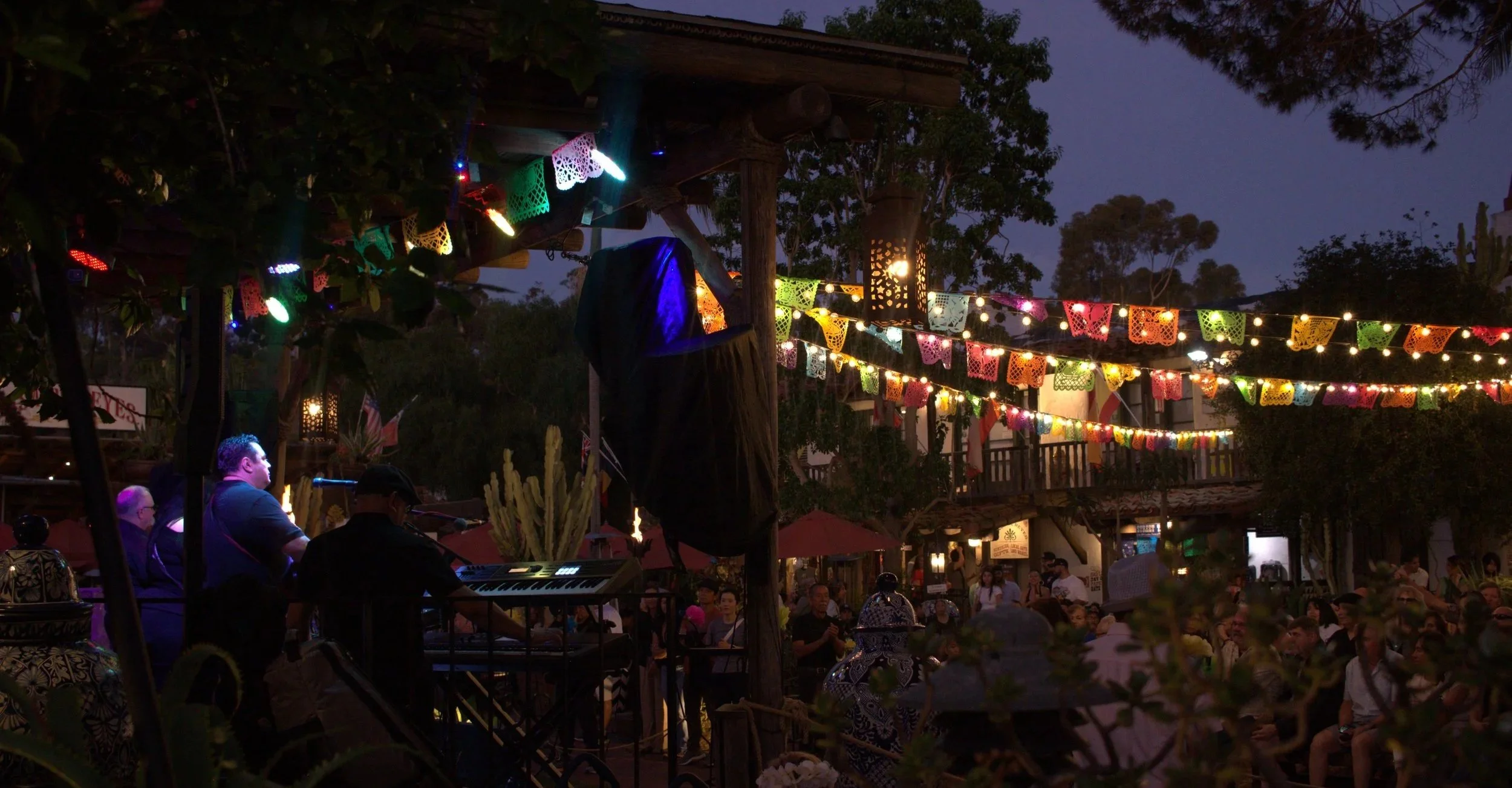
Multiple rows of hot pink, forest green, ocean blue, and mustard yellow papel picados hang around the ceiling. You can’t find the start or the end of it, it’s everywhere. Infinite.
The husky voices of the saxophone float around the air, along with the light, yet quick, strums of the guitarron and clear, yearning vibrations of plucks of the guitar. If you listen even more carefully, you can hear the rhythmic slaps on the bombos, like my dad tapping the watermelons at Costco to find the most ripe one. There’s also hints of the electric keyboard and drums set all the indie bands use. People are salsa dancing on tip-toes and beaming in smiles to the mariachi.
I smell the heavy, savory corn tortillas alongside the meaty, smokiness of marinated chicken, pork, and beef. I hear and feel my stomach grumbling. I smell the same bitterness of the beer, my dad always had in his left hand.
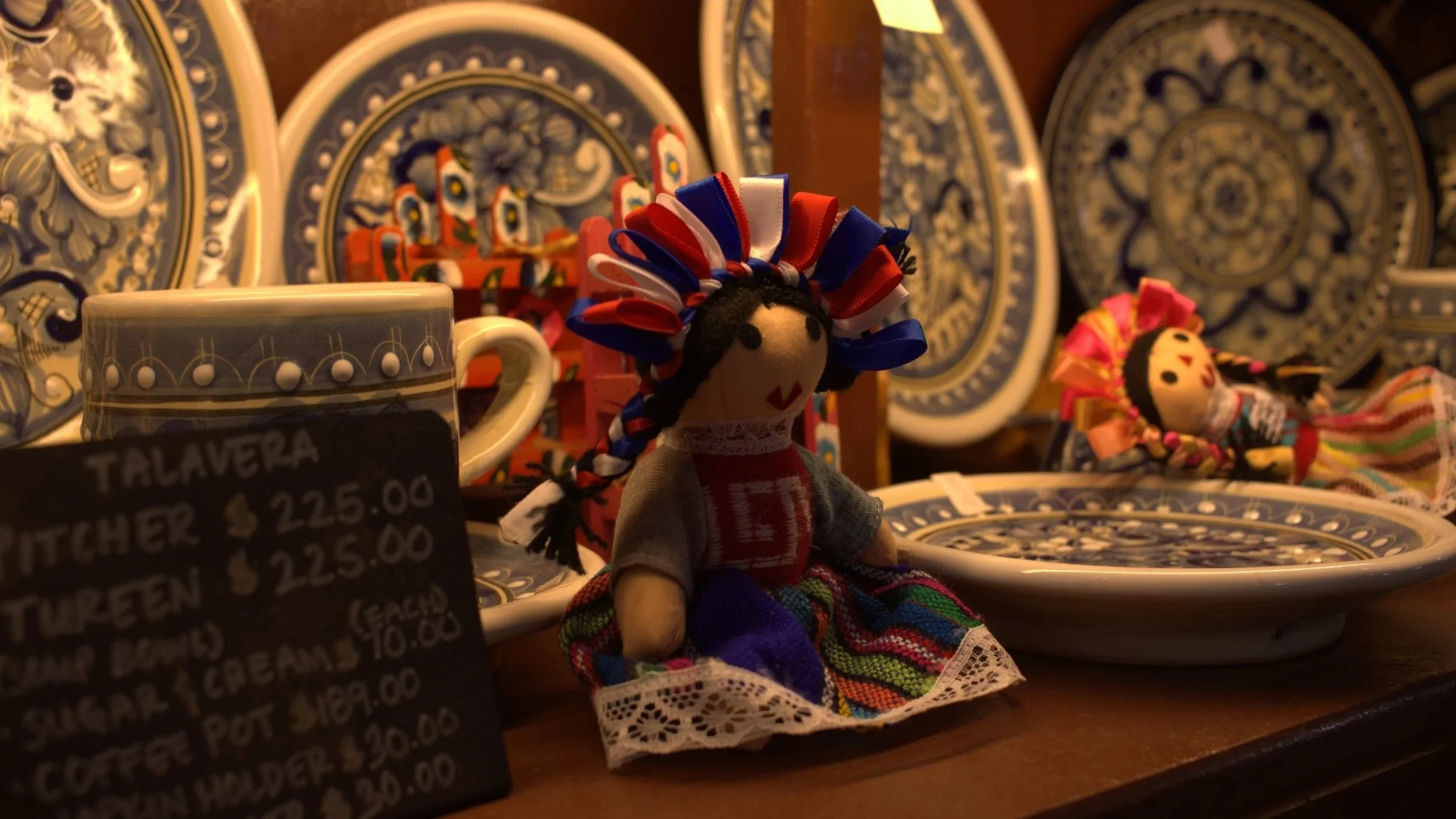
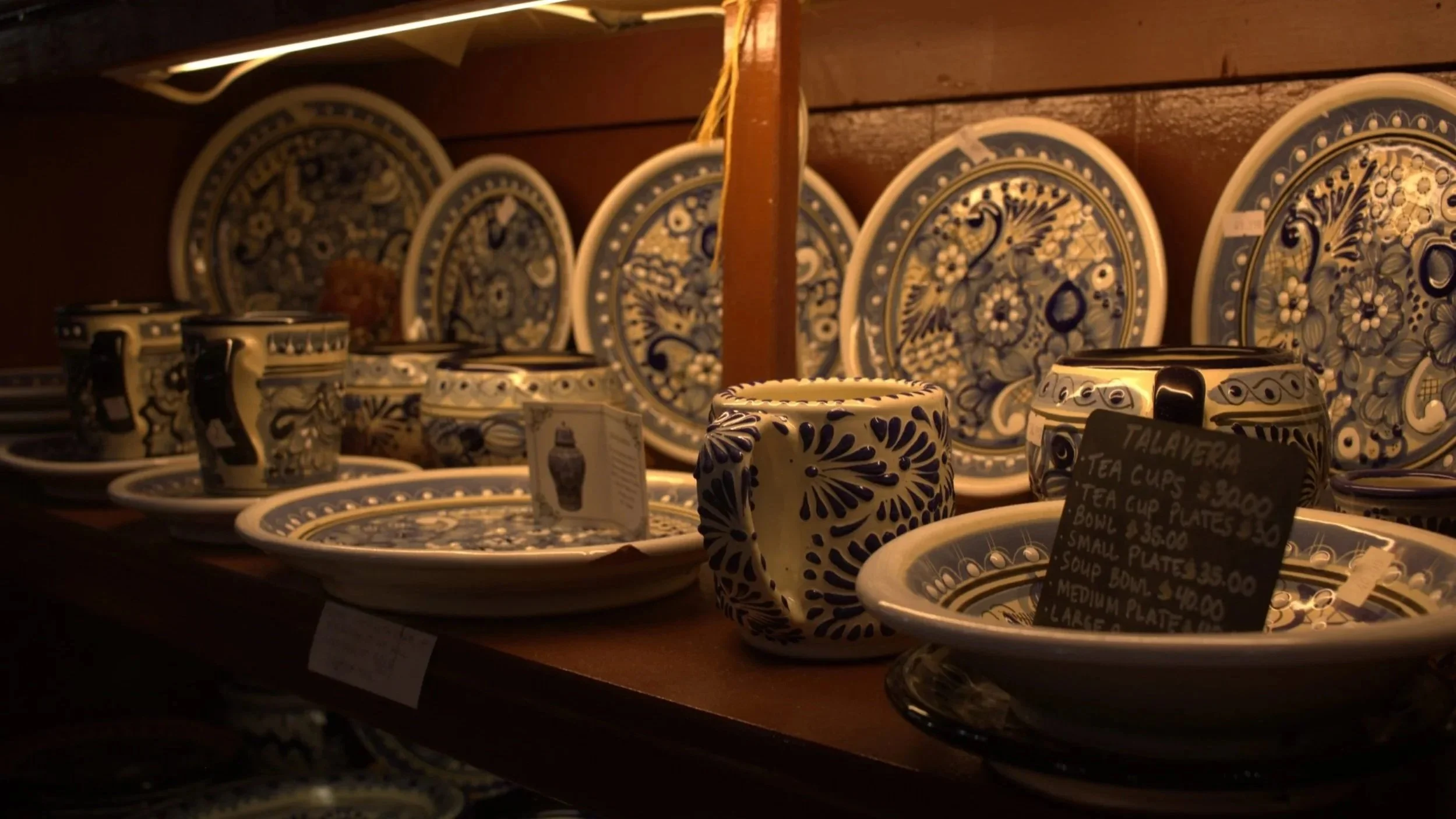
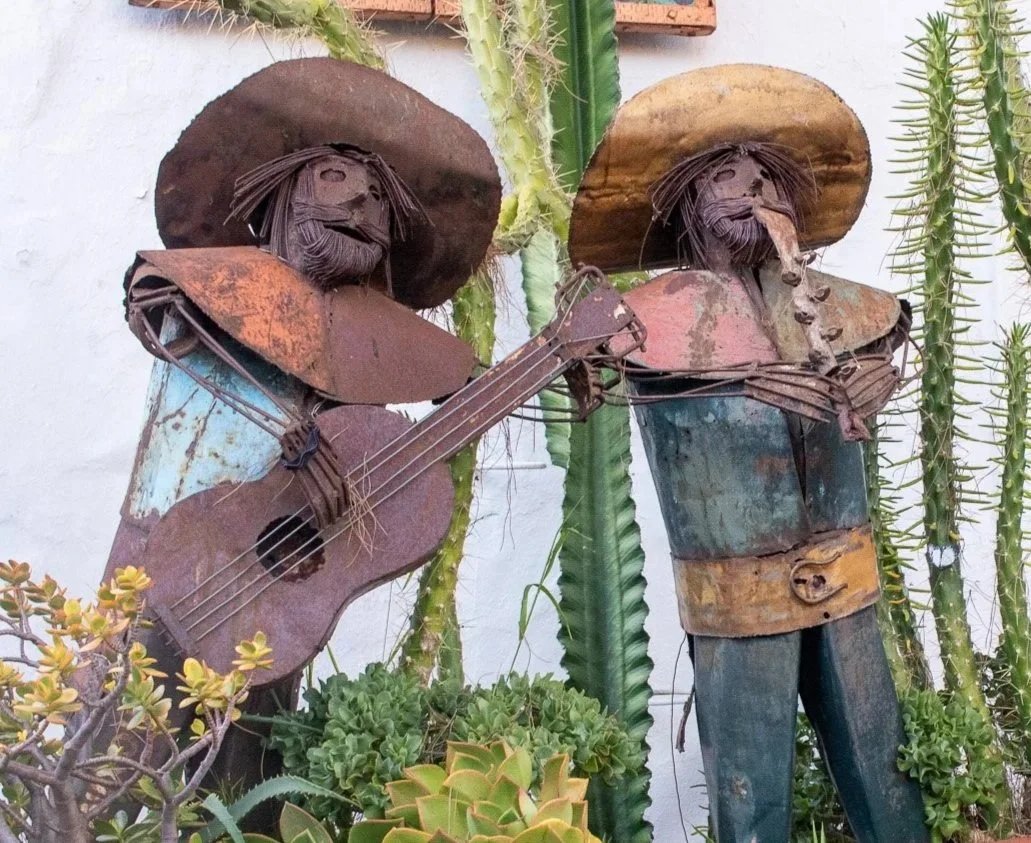
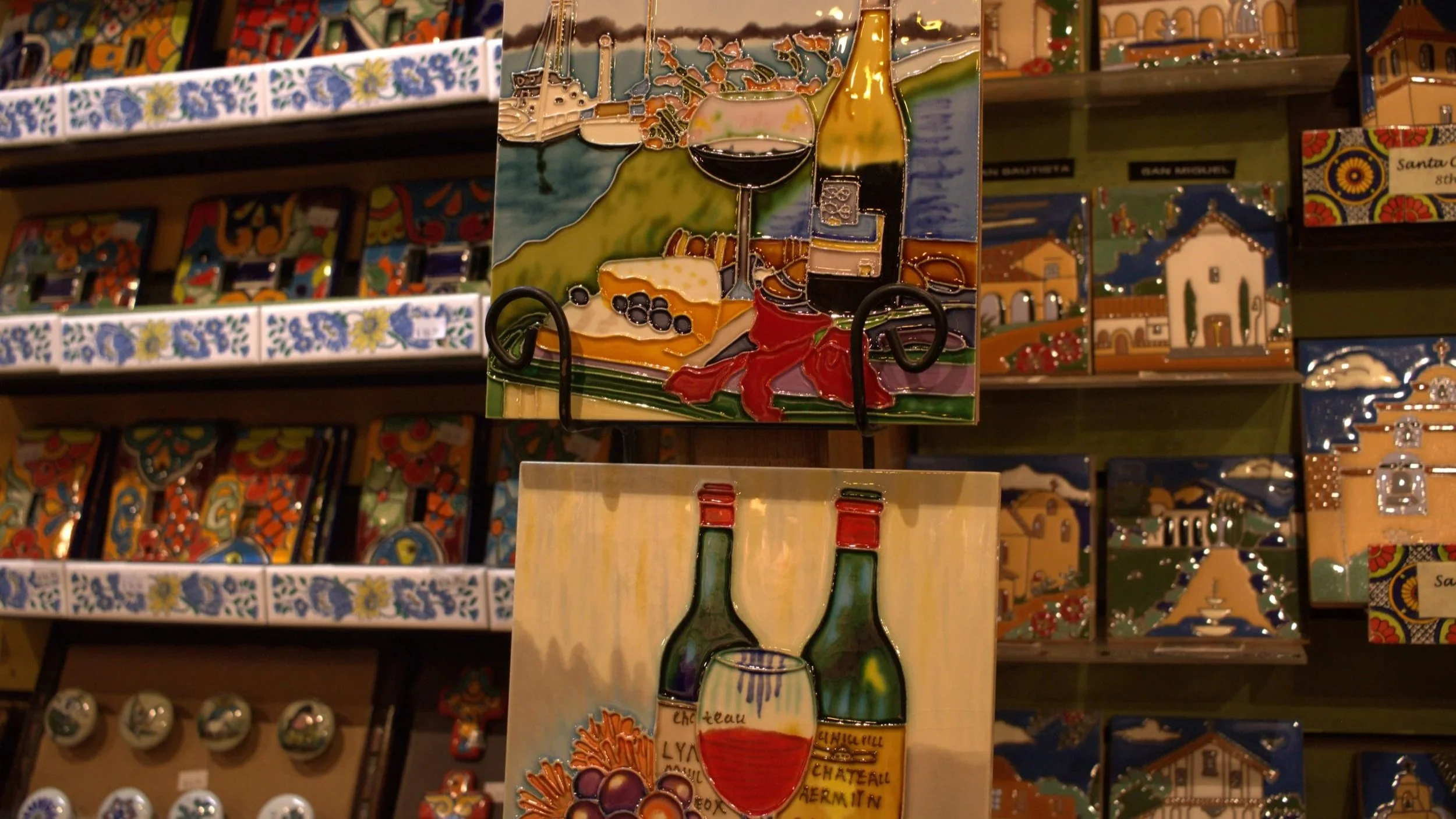
Shops are aligned, low-roofed, and tight-knit against each other around the plaza. As if they are all hugging each other up. The shops each have their own specialties: leather bags with floral stamps, tequila, olive oil, shot glasses, cowboy hats, Day of the Dead sculptures, and tiles.
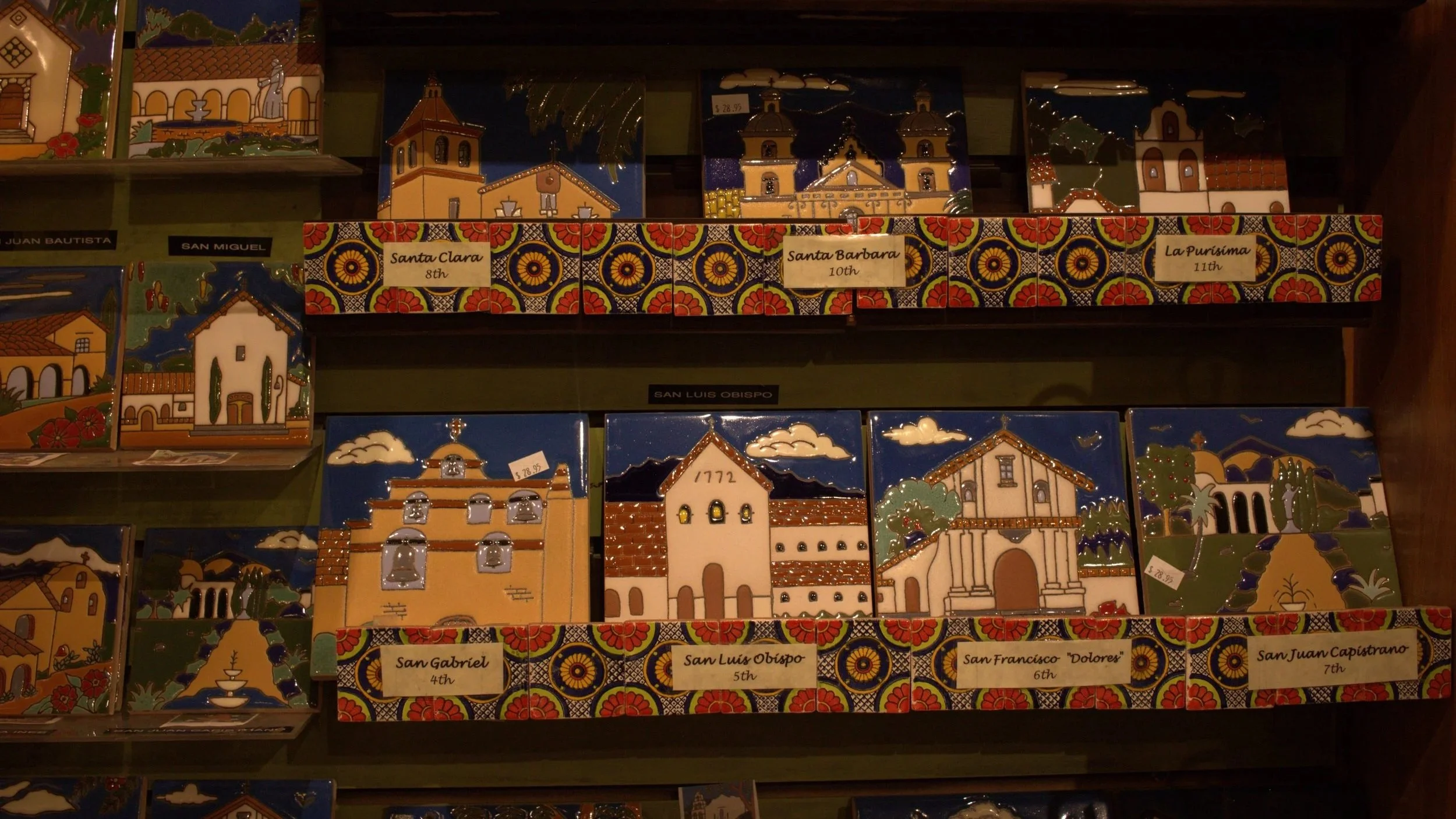
I walk into the tile shop and again, a burst of bright colors jump at my face. There was a sense of freedom in the vibrant colors and intricate patterns of the tiles. The tiles expressed and evoked something, unlike from the plain white tiles in my overpriced apartment bathroom back at Berkeley.
I asked the owner where the tiles are sourced and she replied that her father flies to Guanajuato himself and buys the tiles there to bring back to the shop and sell it to tourists. She adds that people in Guanajuato don’t like it. They think it’s too tacky and messy.
Did culture become a tourist trap? What is culture?
I left the tile shop to go to the restroom. There, I saw a woman dressed in traditional Mexican clothing. I sensed a small yearning. Curious about what this place means to her, I asked the woman. She explained how she lives 2.5 hours away but grew up coming here for the elotes and tacos with her family. It has become a family tradition, she says. There seems to be a home that feels safer, homier than even your own home.
I step outside of the restroom and am greeted by a cart selling elotes and horchatas. The worker behind the cart is in the same traditional clothing. I see a short, middle-aged woman waiting for her elote, leaning against the side of the cart. I ask her the same question: What does this place mean to you?
The middle-aged woman is from Guadalajara and explained how she feels a sense of belonging at the fiesta because of the tradition and custom the fiesta preserves and represents. Yet, she emphasizes that it’s different from back home. She states it may seem Mexican but there’s a mixture of cultures here. There are Indian, black, and white people. It’s not the same.
There is this hunt, mission to grasp onto something intangible, fluid, and spiritual. It feels like we are trying to catch the moon. We climb higher and higher, yet the moon is always at a distance.
Yet, we continue to tighten our shoe laces, sharpen our tools for this bon voyage in everywhere we go and in everyone we meet.
I’m not sure if I will ever truly feel at home infinitely, but Fiesta de Reyes seems to help Mexicans, Latinos, and even Americans achieve that, at least for a slight moment. Fiesta de Reyes has been perfectly curated to be a place where we can, for a minute, forget about our president ripping families apart or the harsh realities of the American Dream. And also our failing relationships, unstable career paths, and overwhelming, neverending list of responsibilities. It is where the vibrant rainbows, light-hearted music, and clinks of glass bottles can hypnotize us, momentarily, into the glory of our youth and the feeling that we are right at home.