The Salt Lake City Issue
The Plat of Zion
Salt Lake City’s Utopia
The Plat of Zion was an urban plan for the “City of Zion,” intended to be the Church of Jesus Christ of Latter-day Saints’ (LDS) utopian home. According to tradition, the Plat of Zion was revealed to the church’s founder, Joseph Smith, via divine revelation. To find a suitable home for their city, the Latter-Day Saints journeyed West, founding 537 settlements along the way. Often facing violent local conflicts, they tried to settle geographically undesirable land, untouched by white settlers. Only 88 (17%) of these settlements were abandoned, a remarkable success rate for the time, according to National University of the Litoral Professor Cecilia Parera’s paper on LDS town planning. The City of Zion was founded at the end of their travels in the isolated Salt Lake Valley. With the quality of a modern-day myth, they planted a sagebrush branch at the site of their future city’s temple. This would become the epicenter of their utopia.
Nathan’s family, the Brimhalls, settled the valley with the Latter-Day Saints’ original band of pioneers. In fact, one of the buildings at Brigham Young University (BYU), the George H. Brimhall Building, is named after Nathan’s ancestor, a former president of the university. I first became friends with Nathan in middle school. He’s very thoughtful and clearheaded, and I respect how he rationalizes his devotion to his faith; his dedication lies almost as much in his faith’s moral guidance as its spiritual promises. He and his wife Tiana greet me and my friends on Sunday outside his BYU ward. He’s wearing a clean white dress shirt and a blue tie, and his hair is combed straight to the middle of his head. He and Tiana apologize for the mess in their living room, which really only consists of stacks of games under the TV and some dishes left in the sink. Six wedding invitations are pinned on the fridge; students get married mostly in the summer, in between terms. A quick Google Search yields four wedding boutiques and at least nine wedding venues in the campus’s immediate vicinity, most straddling West Center Street and Pioneer Park.
Nathan takes us to an ice cream social on his ward’s lawn. We draw white foldable chairs into a peanut-shaped circle. Since it’s early Sunday afternoon, we catch the traffic at the tail end of Sunday service. Guys walk around in white button-downs, striped ties, and dress pants, girls in pastel pink and blue and pale green dresses. A dude with his hair flowing behind him rides by on a motorcycle, clad in the same church attire. The campus is very white. Literally. If not white, the buildings are gray, tan, or a light brown. We walk through the Wilkinson Student Center, with its cavernous conference rooms reserved for student events, and stop to talk to students. People are super friendly. They pose for pictures and give us uncrustables and ask us about California.
Nathan and Tiana attribute SLC’s success to its aspiration to fulfill its “Zion” utopia. “‘Zion people of one heart and one mind’ is a phrase that’s used. And with service and charity and love and dedication, those are the values that a Zion people would have.” They say the founders’ motivation was to create a Christ-like society, one that was loving, charitable, service-oriented, and dedicated. Tiana draws a parallel between Smith’s successor, Brigham Young, and Moses, when he received divine revelation and led the Israelites through the deserts of Egypt. Brigham Young’s promised land is now perhaps the largest theocratically founded city in the US.
In Salt Lake City, all roads lead to the Great Salt Lake Base and Meridian. Streets extend in a coordinate system from the small monument. For example, if you wanted to walk from your home at 500 East 200 South to the Fear Factory Haunted House at 666 West 800 South, you would walk about 11 blocks West and 6 blocks South. We’re trying to get to the Base and Meridian from Victor’s Tires at 1406 South 700 West on Saturday, so we go 14 blocks North and 7 blocks East. We rent the city’s nonprofit bike share for $9 and pedal through the spray-painted alleys of the industrial granary district to the City Creek Center mall. Across the street, the Salt Palace Convention Center is hosting the Utah Young Single Adult (YSA) conference; the mall is aswarm with kids wearing lanyards and clear plastic drawstrings. In an effort to modernize for young church members, the church booked Andy Grammer and Christian rock band NEEDTOBREATHE to perform. I can’t think of any of my college friends bumping either.
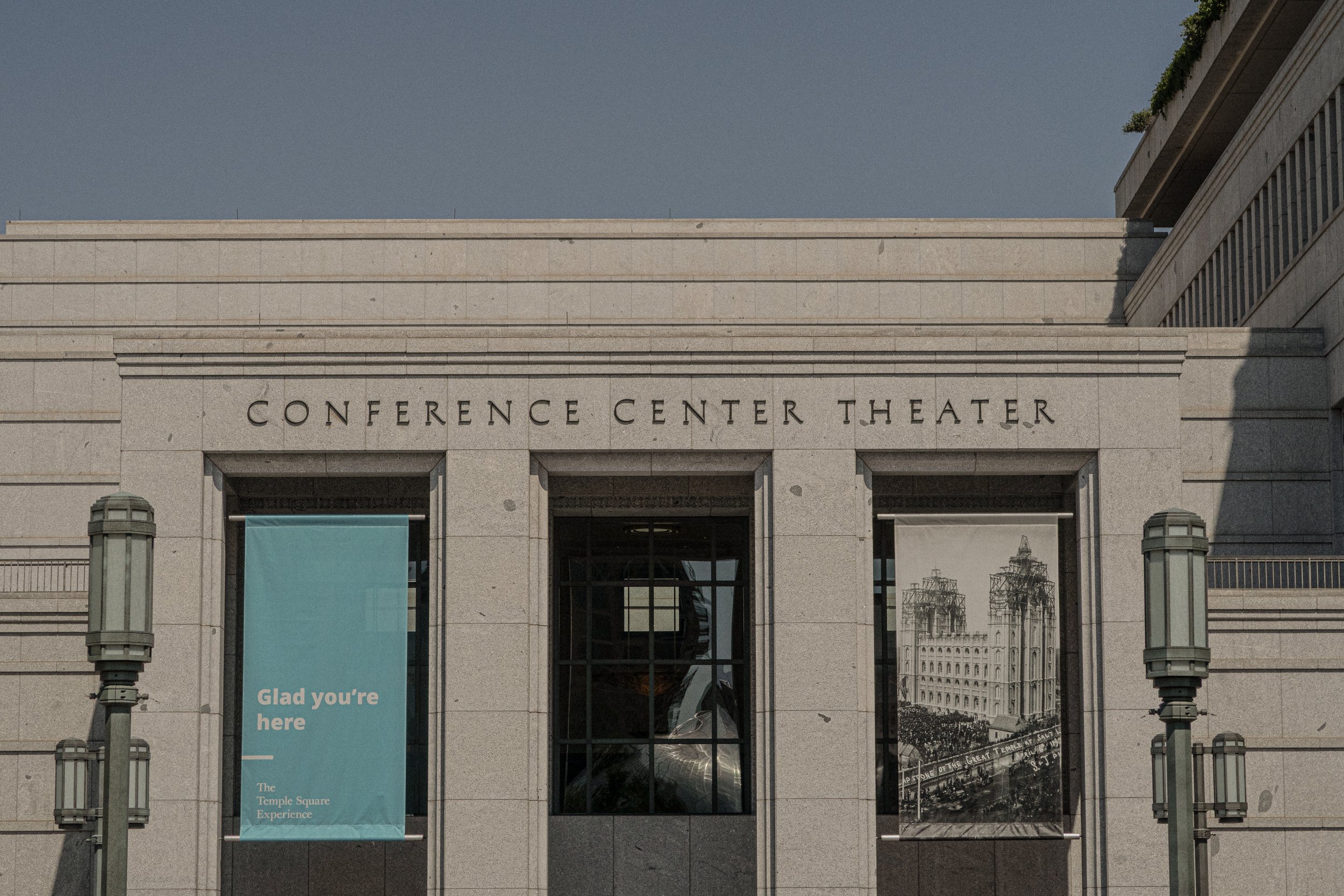
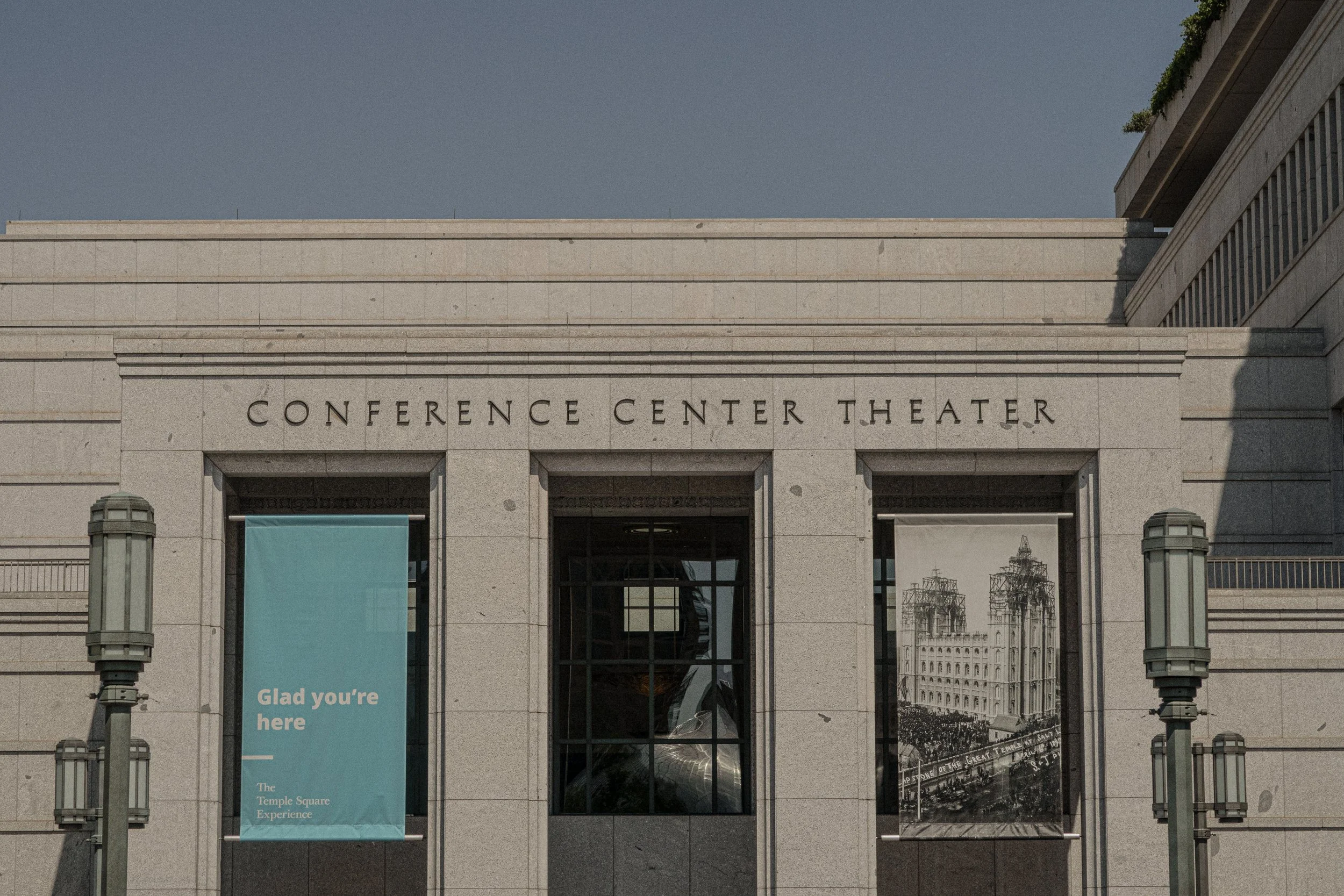
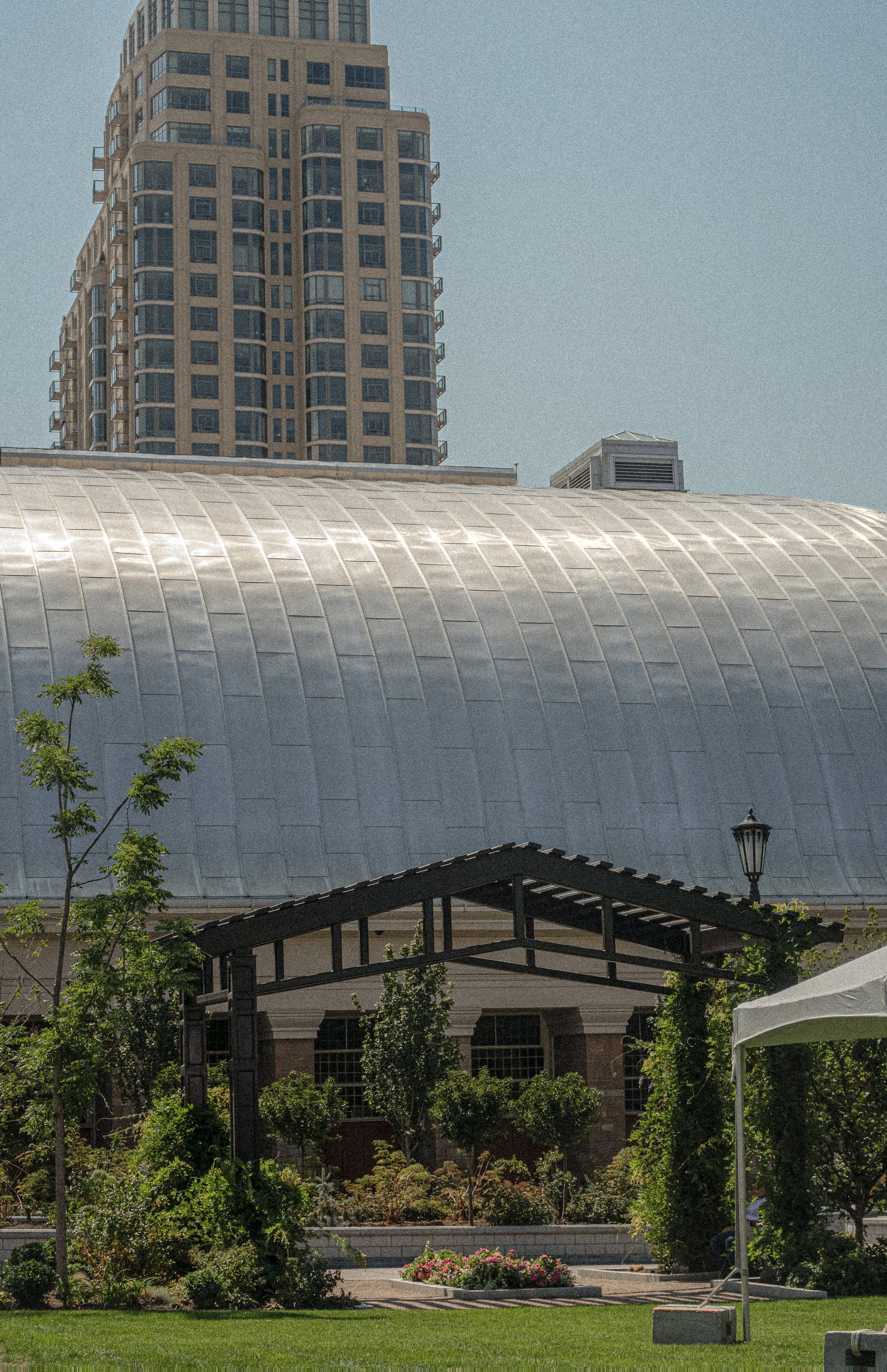
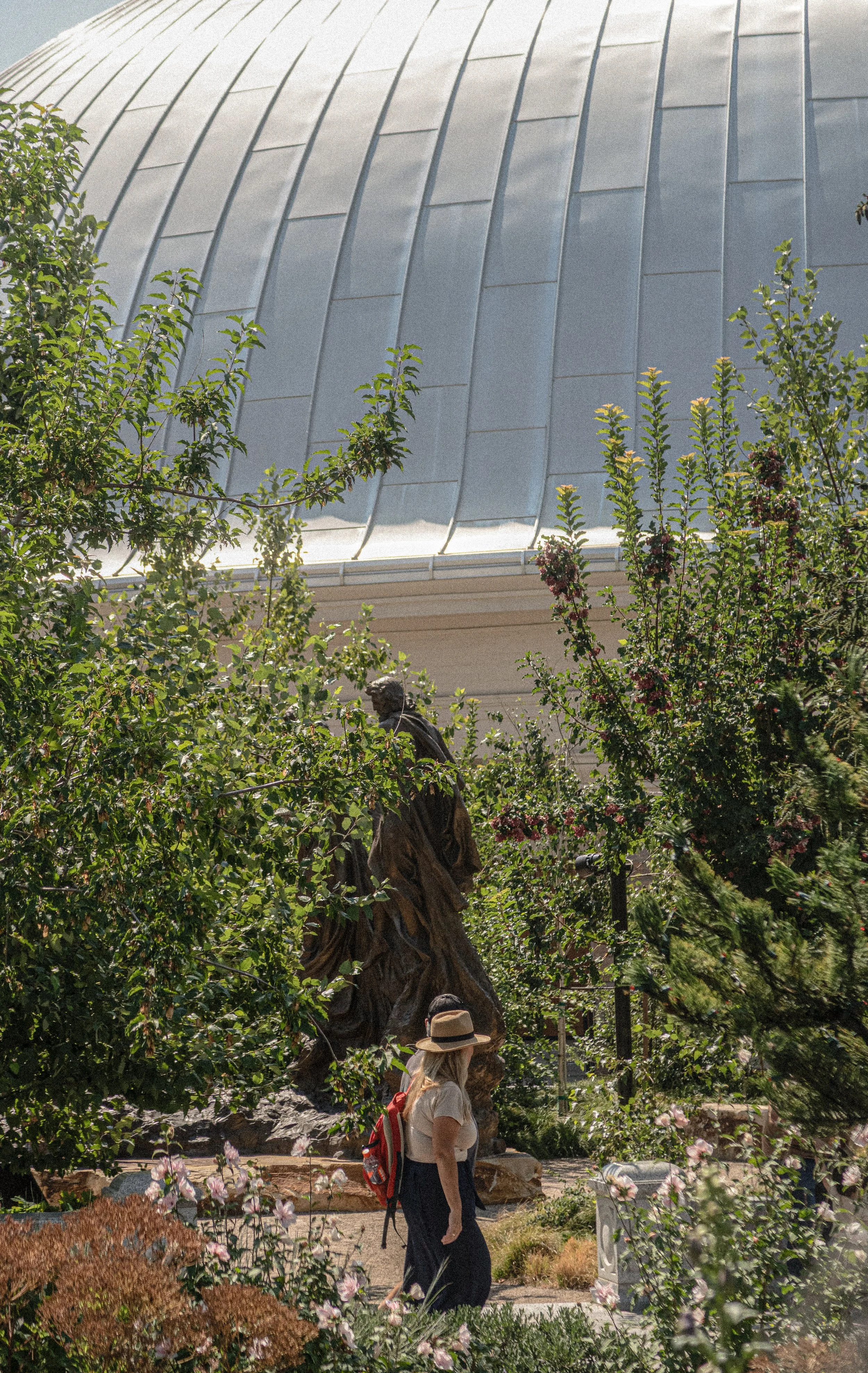
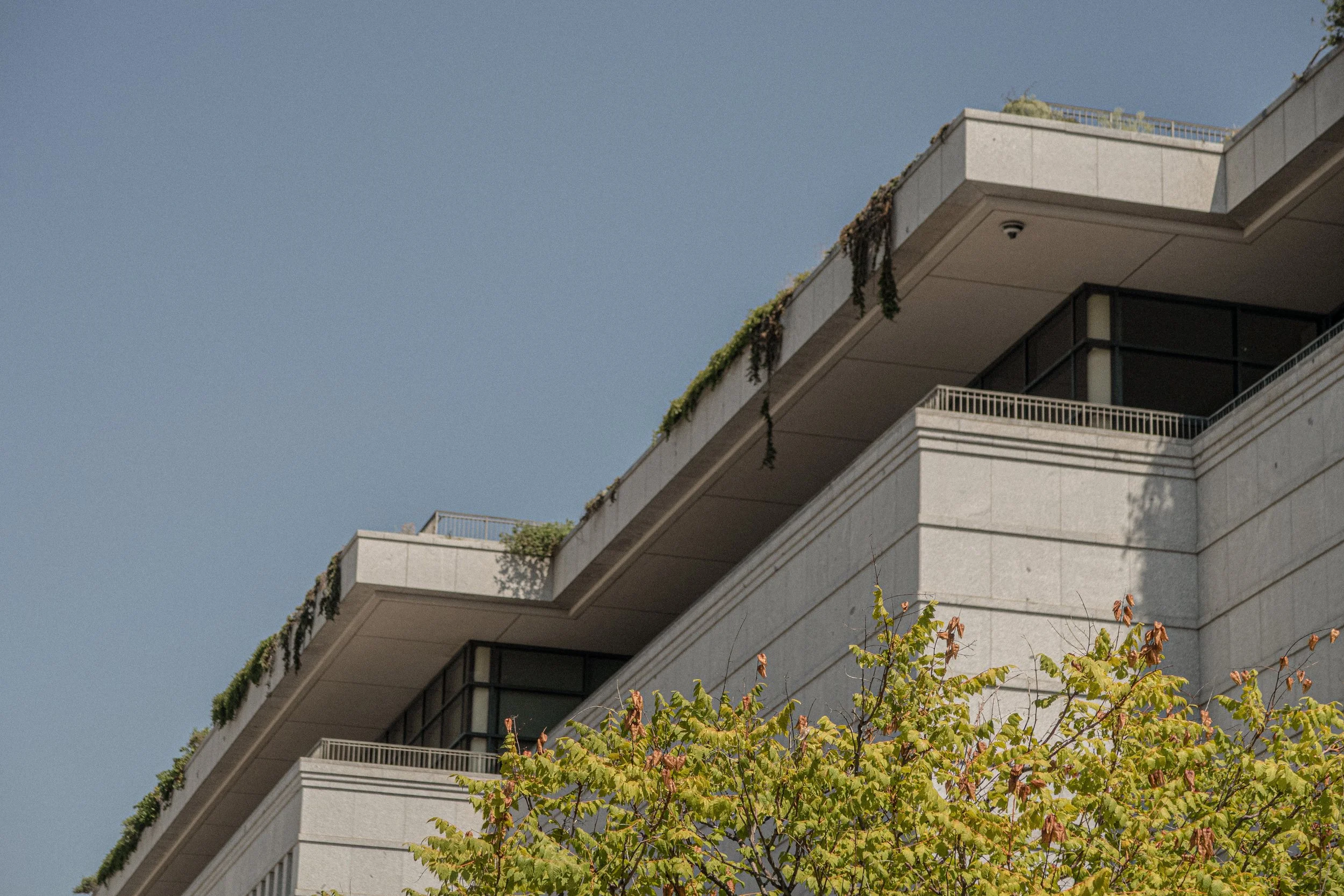
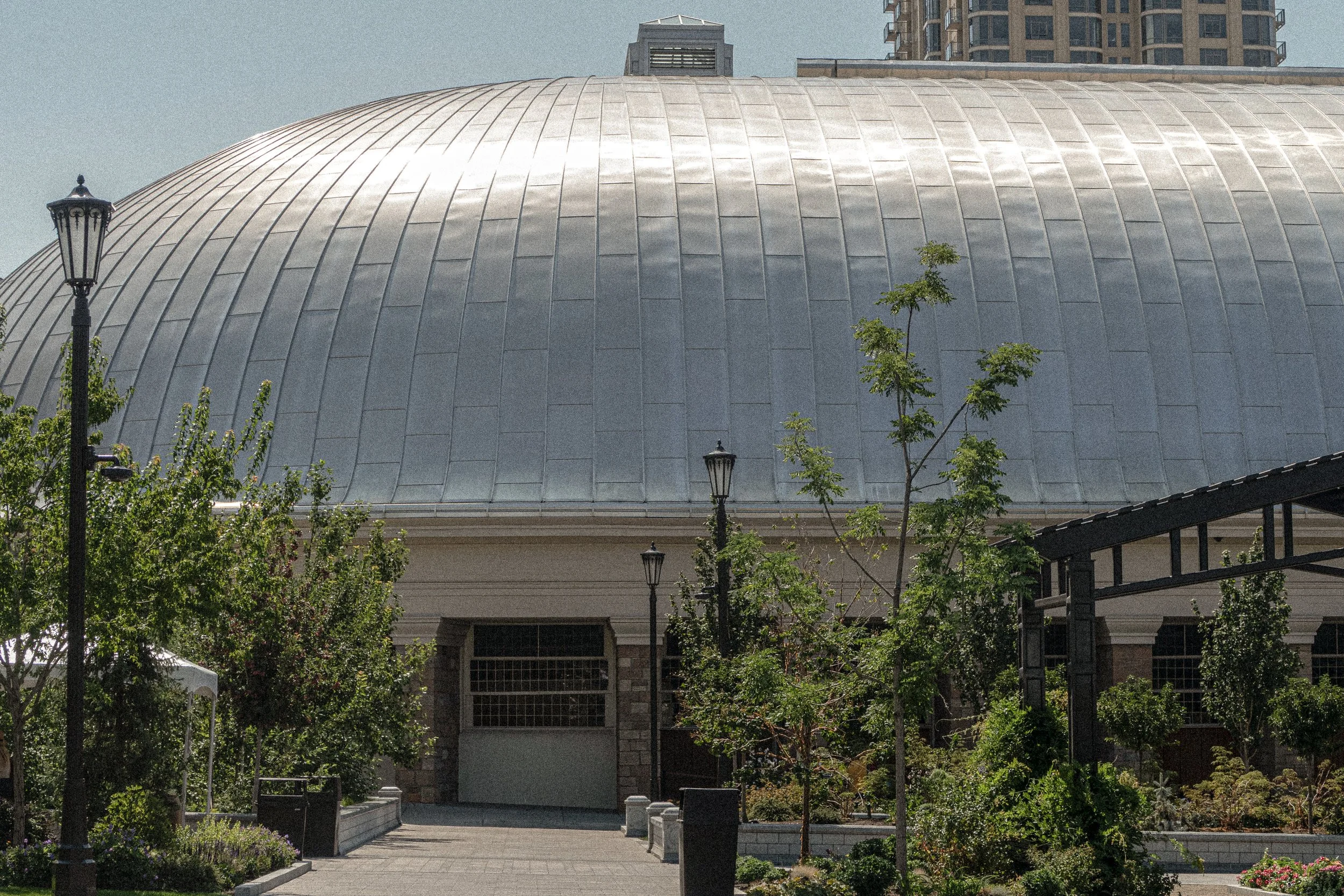
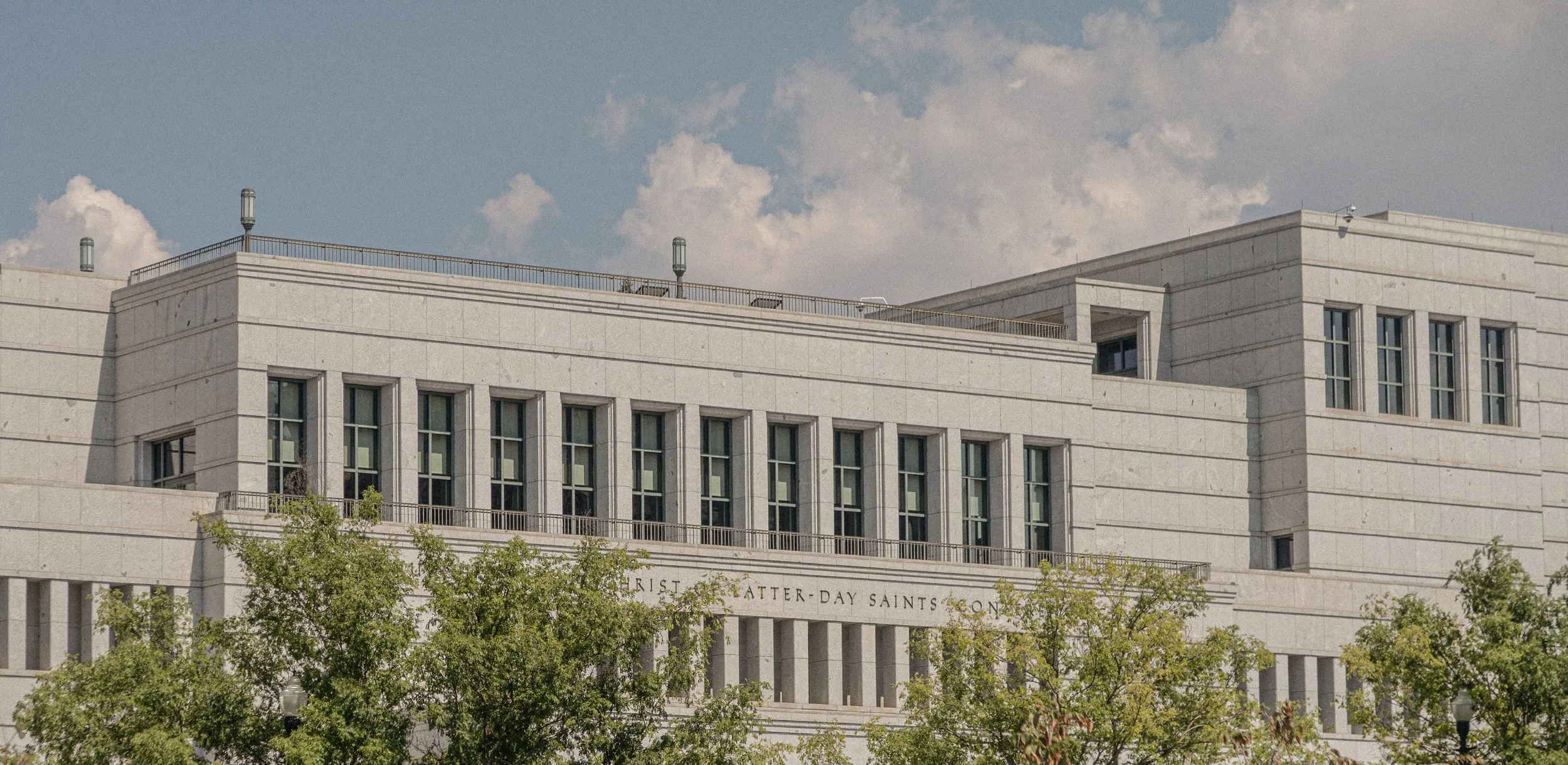
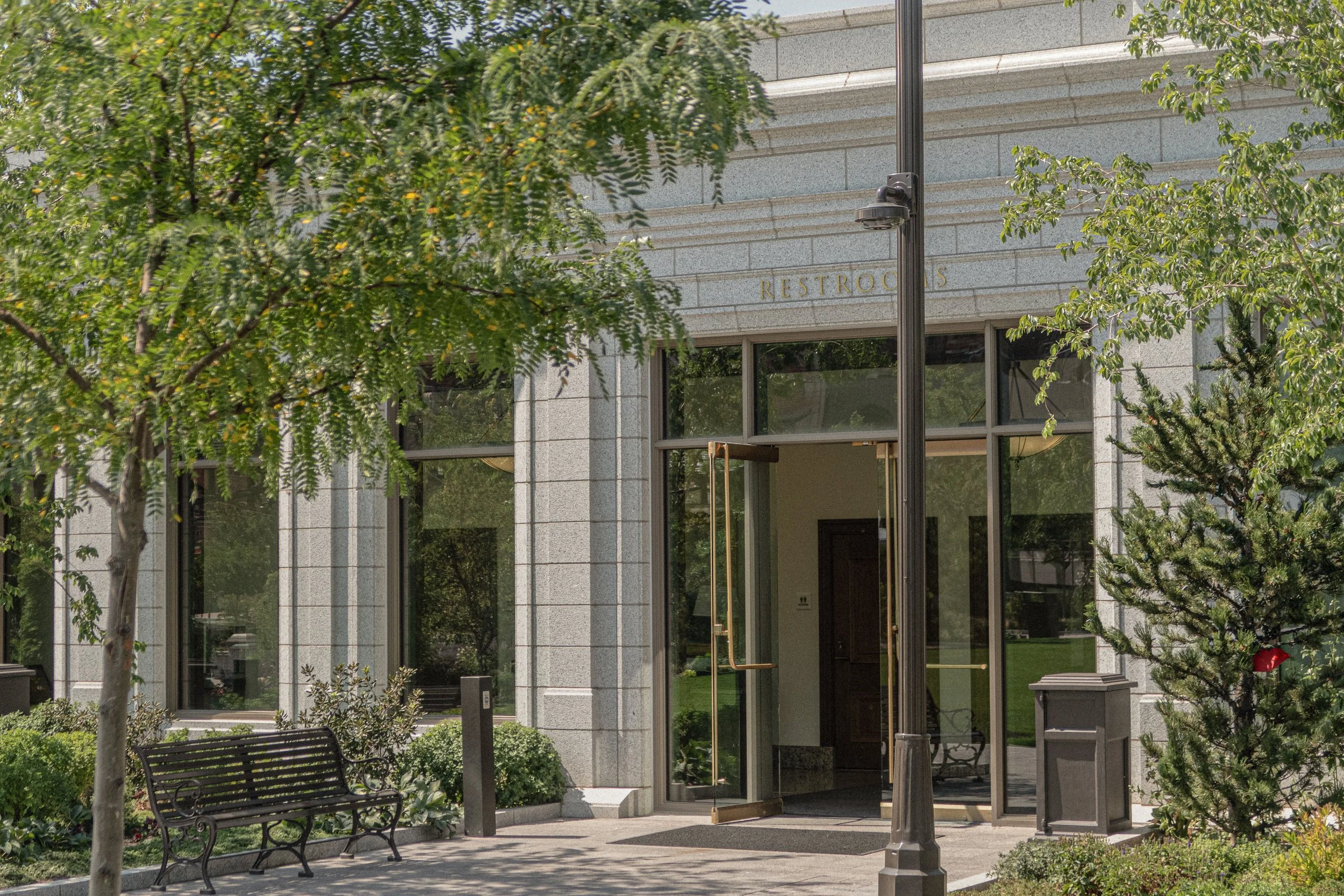
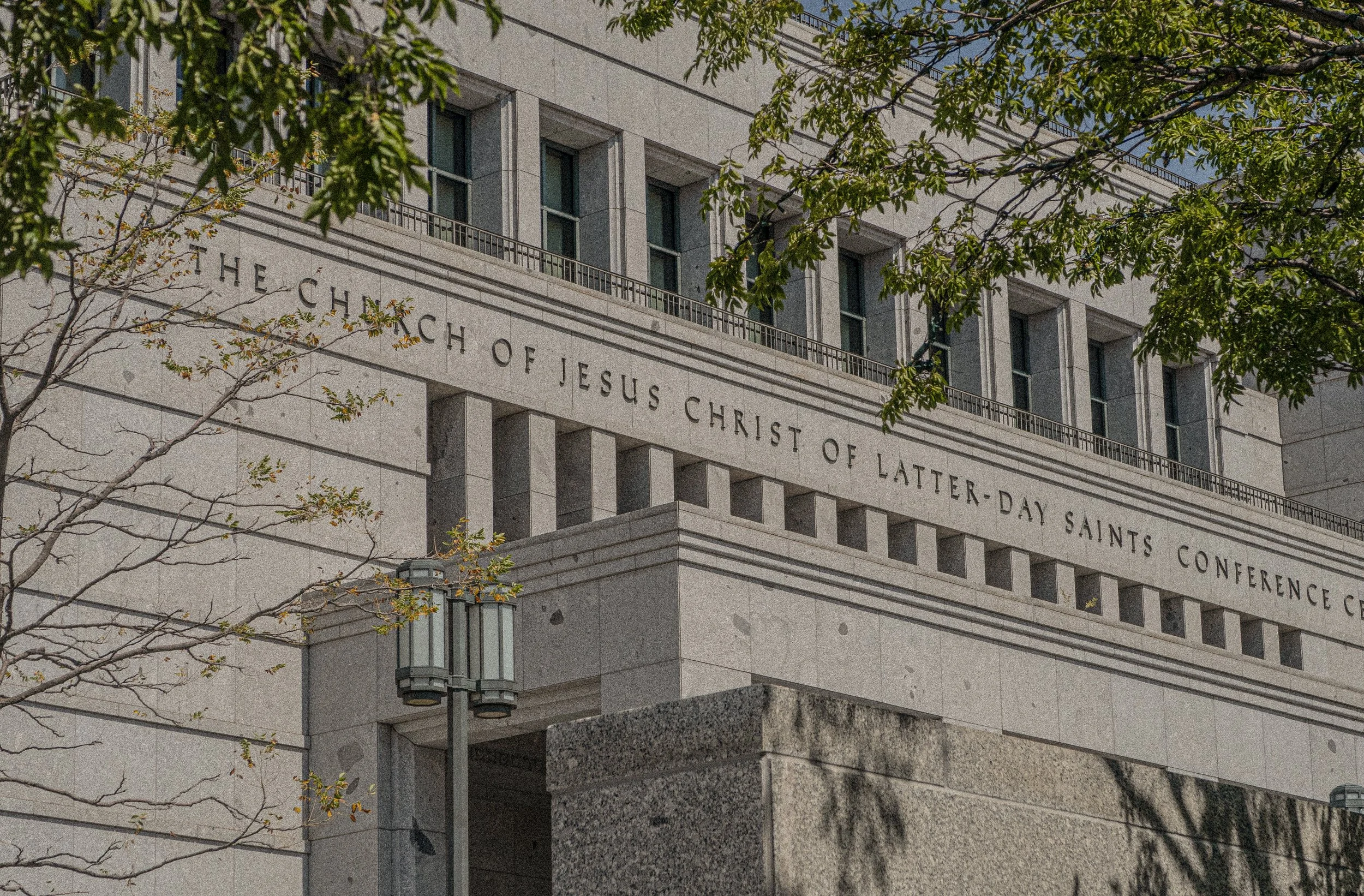
Joseph Smith had originally wanted the city center to hold 24 temples. Instead, he got one. Today, the Salt Lake Utah Temple is sheathed in scaffolding for construction, and Temple Square is quiet and still. The surrounding Joseph Smith Memorial and Church Office Buildings are a dissonant clash of white Greco-Roman style terracotta and brutalist stone high-rises. The manicured lawns are eerily perfect yet empty. The square is a utopian cliché, unsure if it wants to modernize.
Joseph Smith designed the Plat of Zion with a grid of 10-acre blocks latticed by 132-foot-wide streets. According to University of Utah Professor Emerita Brenda Sheer’s paper in the Utah Historical Quarterly, the huge blocks may have unintentionally provided the necessary space for the city to adapt. These blocks easily accommodate new communal spaces. Downtown, City Creek Center spans the two blocks just South of Temple Square. The Center is bordered by the Salt Palace Convention Center, Delta Center, the Gateway (another mall), and various other arts and cultural venues to the West. Throw a ball in the air and you will likely hit a busy cultural or commercial center.
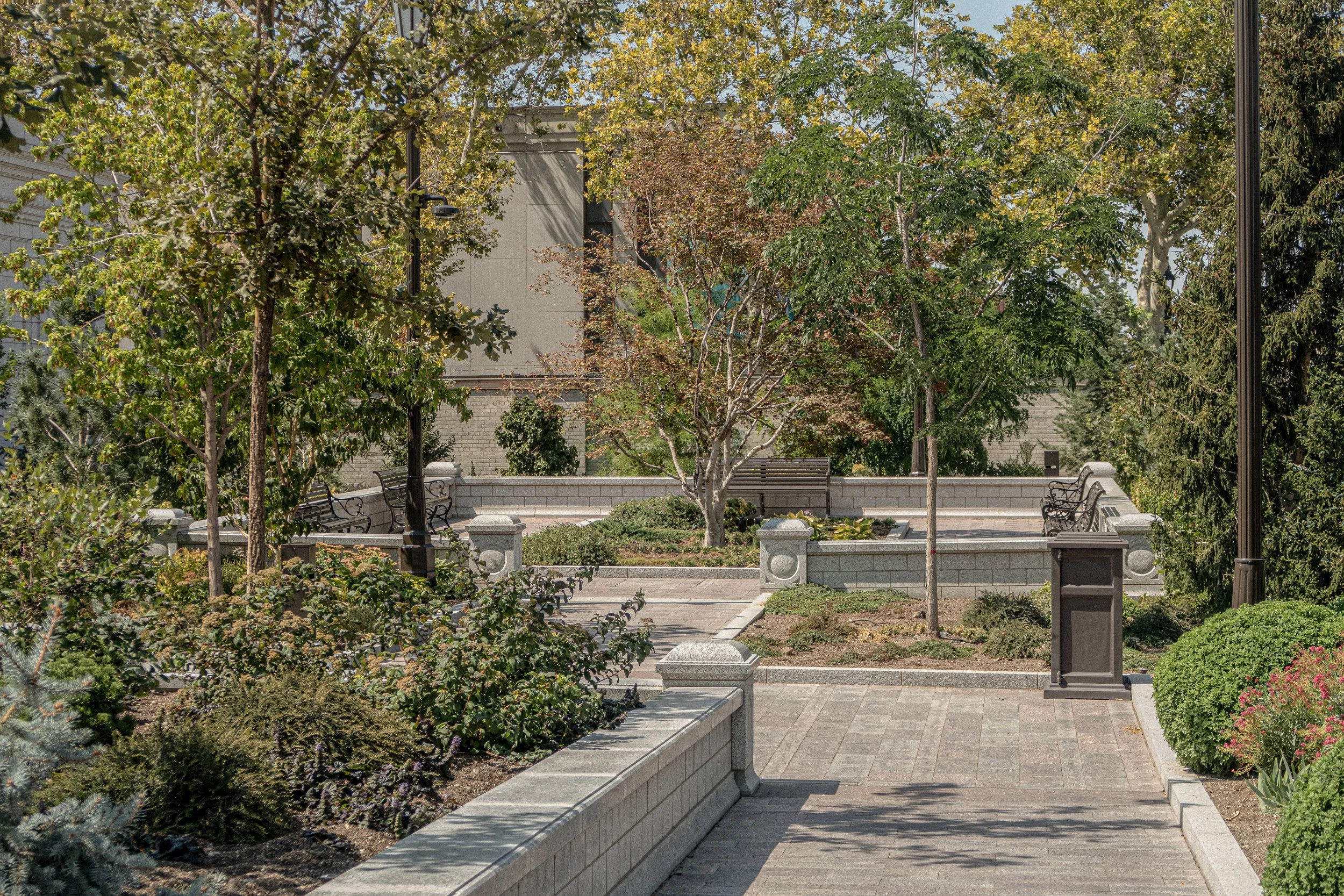
“You see a lot of community space. You see a lot of open courtyards, parks for people to come together and talk. Within the Salt Lake area there's usually a lot of open green space around places of our worship. Like every temple is surrounded with trees and flowers.” Nathan, Tiana, and I settle at a tree-shaded bench by the Greco-Roman Karl G. Maeser Building, named after BYU’s founder. Pods of blue, white, and baby pink students pack plastic tables and chairs away on close-trimmed lawns. I ask him and Tiana how they think the city’s changed from its founding vision. He tells me I-15’s traffic is getting backed up. A couple of weeks later, I watch an Instagram reel of a guy from BYU taste-testing tampons in a campus library. I wonder if Maesar would’ve laughed. Probably not. He’s frowning in all the pictures I see of him.
Now, it’s a Saturday night and Temple Square is empty. My friends and I are at Pie Hole, a latrinalia-encrusted pizza joint crammed between bars, at 344 South of the Base and Meridian. Alisa and I make an alc run to DABS Utah State Liquor Store #1, the first of the state-owned liquor stores. The store is filled with shoppers at 10 PM, right before closing time. We pick up a bottle of “Five Husbands” vodka, advertised with a picture of five shirtless guys in jorts standing over the pride flag. Wonderful. We wave some of the city’s orange pedestrian flags for fun as we cross a 132-foot-long crosswalk. SLC’s a funny place, far funnier than I think Smith had planned it to be. Its founding utopia was meant to be well-structured, white-paletted, pure. But the city’s people took Smith’s terracotta plat and filled in the blanks. I think newer generations are defining their utopia to be a little messier.
Where do you think you want to be after college? I ask Nathan, expecting him to say Salt Lake.
Maybe San Francisco, he tells me.
————————————————————
Words: Andrew Tao
Photos: Hitiksha Bansal, Sylvie Lam
Design: Josie Hsieh