Leaving San Diego
On Tom Waits and Leaving Town
After funding for his one year of study at Oxford dried up, writer and literary critic Samuel Johnson fell into despondency, unsure of what to make of his life post-college. The usually witty and social man returned to his hometown, Lichfield, started a private academy, and took a job as its sole teacher. He had three students before it failed. Bouts of melancholy tormented him. Finally, he left his home for London.
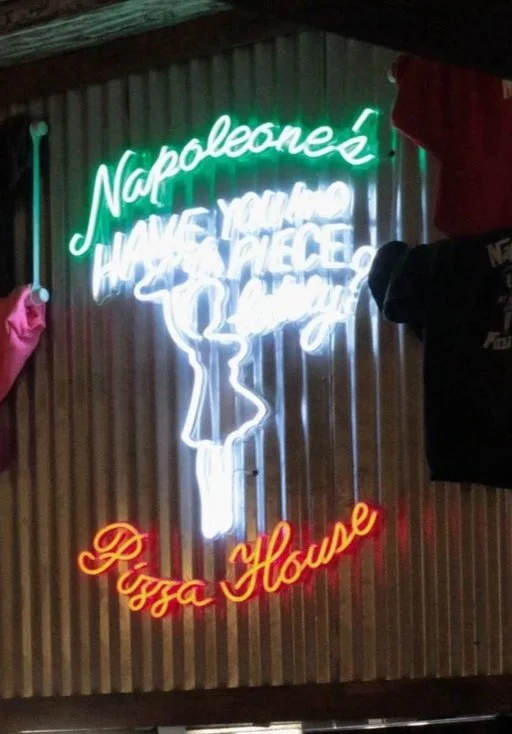
My friends and I order pizzas from Napoleone’s Pizza House, the sole lighted restaurant in our section of National City Boulevard. Cartoon-style drawings run the perimeter of the restaurant in a two-foot band below the ceiling. They show nostalgic, hometown San Diego: a high school running back tears down the field under a cheering crowd; old bars line National City Boulevard, called Brown Bear, Mustang, Tahiti, Melody; patrons sit at a bar counter, named Jeff, Bone, Mel, Big John. Below the drawings, the actual counter serves sodas on tap. Across from it is a black and white portrait of a man looking out from under a pork pie hat. He sports a soul patch and peers at you through deep set eyes. His name is Tom Waits.
There’s a Tom Waits wiki. The first entry under his time at San Diego is Napoleone’s Pizza House, where Waits worked post high school, washing dishes in the restaurant’s kitchen. While working, he collected overheard conversations from restaurant patrons; years later, he compiled those observations into the song, “The Ghosts of Saturday Night,” a view of the pizza house and the Boulevard, then dubbed the legendary “Mile of Bars,” at four in the morning.
“A cab combs the snake, tryin' to rake in that last night's fare…
“Leaving the town in the keeping of the one who is sweeping
“Up the ghosts of Saturday night.”
My Freshman year, a Senior friend said he’d see me after college, when I'd become a fully formed person. My friends and I are now Seniors. We’ve been pickling ourselves dutifully in media and readings, dinners with friends, road trips and band nights — the little pieces of college life that decide the person you will become. I’m happy with that person.
Waits, the persona, is very disingenuous. I recently saw a movie, “Crime 101,” set in LA, where the lead, Chris Hemsworth’s character, and his love interest, Monica Barbaro’s character, share a living room dance to Springsteen’s 1975-85 live vinyl’s closer, “Jersey Girl.” As he sings, “across the river to the Jersey side” and “down the shore everything's all right,” the crowd cheers and hollers. Barbaro’s character says, “They cheer for home, but no one does that for Los Angeles.” Beyond skewering LA’s transplants, her words are a jab at Hemsworth’s character, an ostensible Nowhere Man with no identity and no attachments. Springsteen’s performance is a cover of Tom Waits’ original song. But Tom Waits is not from New Jersey.
Tom Waits appears to be an Everywhere Man. He sings as if sitting at an anonymous grubby American city bar, drinking his liver blue with sailors and lowlifes. But in fact, Waits was born to a middle class family in Pasadena. His father taught Spanish, his mother went to church. They moved to Chula Vista, a suburb of San Diego, when he was ten. For the most formative years of his life, San Diego was his home.
San Diego based author Patrick Coleman writes, “San Diego can seem like a joke—always trying to be something more than what it is, never measuring up, the overlooked younger sibling of LA and San Francisco. Our politicians are prone to corruption. We’re the home town to a losing baseball team, and a lost football team… It’s where you move to go on a permanent vacation (if you can afford the high rents and home prices). You can wear a bathing suit just about anywhere, and any time of year.”
The folk circuit here was too small for Waits. So, he set out for LA.
My friends and I are at a crossroads; every choice we make now will reverberate like pond waves through the rest of our lives. It’s easy to be paralyzed and fall into bouts of aimlessness. A hometown is comfortable, calm, safe, like how San Diego feels. It’s scary leaving San Diego.
Waits talks with Iggy Pop in a scene from the film “Coffee and Cigarettes.” Waits shows up infuriatingly late, grotesquely contradicts himself, and generally annoys the almost timidly reverential Pop. He confides in Pop that he quit smoking, then pulls out a pack, lights a cigarette, and says, “You know that the beauty of quitting is, now that I've quit, I can have one... because I've quit.”
Waits returned to San Diego on his second studio album, “The Heart of Saturday Night.” Tellingly named “San Diego Serenade,” Waits sang, “I never saw the East Coast until I moved to the West” (again, he’s not from the East).
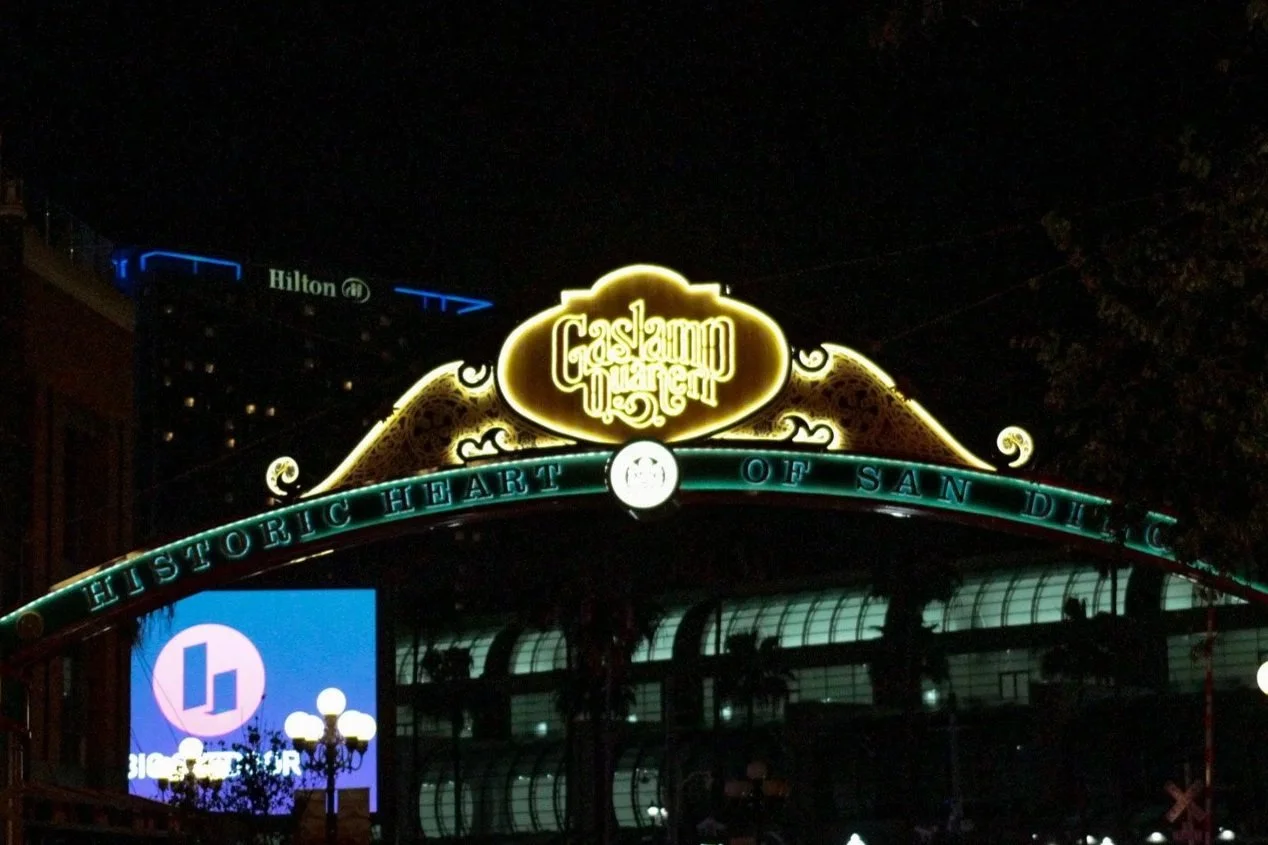
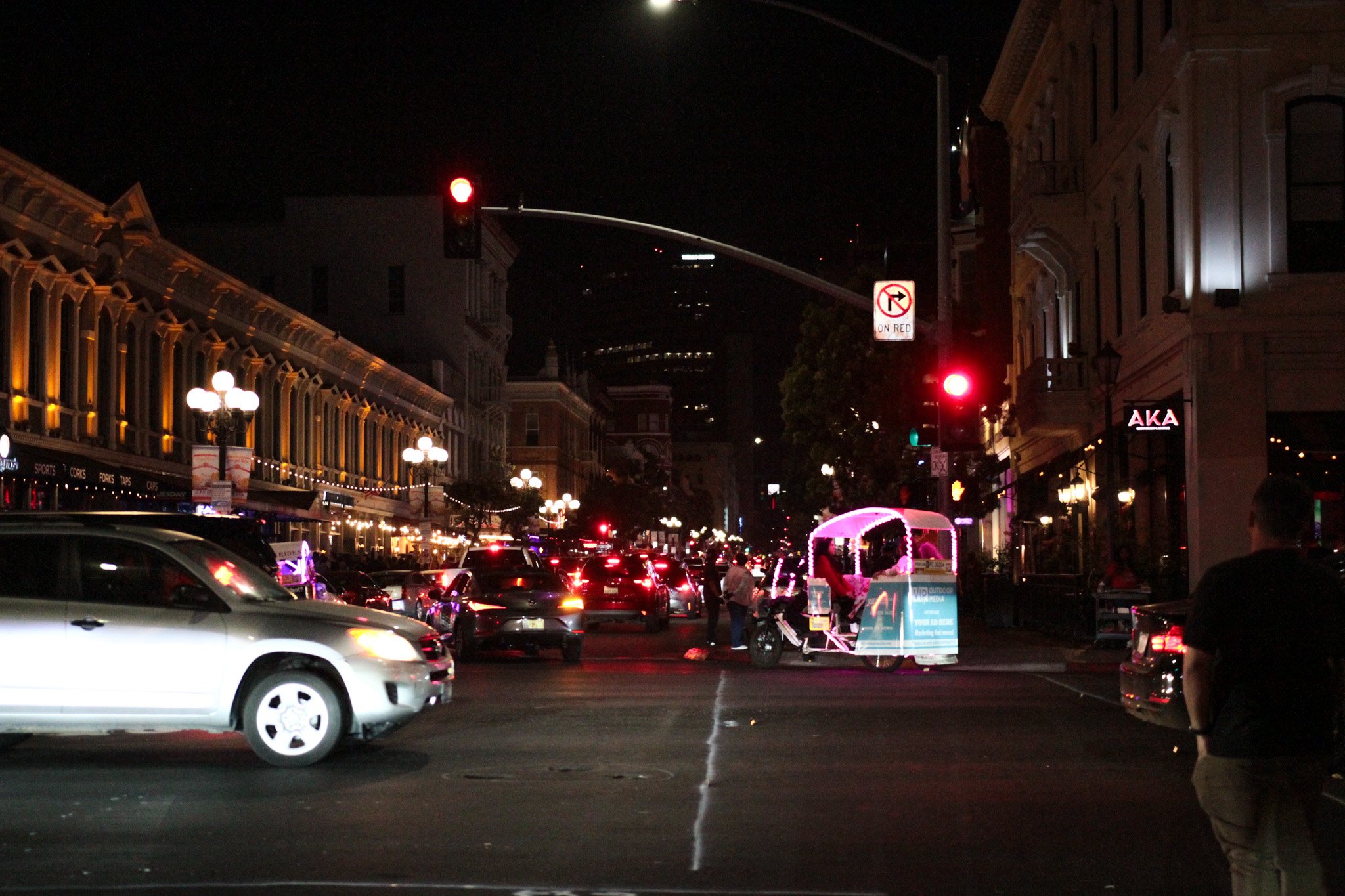
After leaving Napoleone’s, my friends and I head to Gaslamp Quarter, San Diego’s pulsating nightlife center. National City Boulevard’s “Mile of Bars” is long gone. At the Quarter, hordes of college students clog the neighborhood’s Fifth Ave, waiting to get into clubs, while yuppies share a dinner and cocktail at upscale hotel restaurants down the street.
Johnson overcame his post-college rut, compiling one of the most substantial English dictionaries in history and becoming one of the most “clubbable” (a word that he coined) men in London.
Tom Waits, the San Diego boy, shed his middle class background and adopted the persona of Tom Waits, rasped barroom singer, alcoholic comic, exasperating paradox.
Us — we’re expectant. We’re ready for life to begin. We’re leaving San Diego.