
The Salt Lake City Issue
Salt, and the things we are Left with
The mineral preserving mysticism, environmentalism, and history
I stand in my kitchen and crank up the knob of the burner, the flame burns brighter, the steam of the pot clouds my glasses. Chemically, we define evaporation to be the phase change from liquid to gas. I dump a palmful of salt inside the pot and stir the crystals.
Salted water, salted ocean, salted lake, salt lake city, salt.
I’ve wondered on occasion if they called it the Great Salt Lake because the salt lake was so vast and great, or because they found the salt in the lake to be a miracle of greatness. It is rare to find a body of saline water in the middle of a continent, after all. I do some research.
The Great Salt Lake, unexpectedly, used to be greater. Originally called Lake Bonneville, the lake spanned more than a third of Utah. Epochs ago, the North American plate rose beneath the ocean, leaving behind a vast basin of limestone and sandstone, and was littered with marine deposits of minerals and silt, a small token of its underwater origins. During a period of great rain, storms and floods filled the basin and formed the pluvial lake. Through the eons of changes in climate, its volume reduced by nearly ten times its original size.
We observe the modern lake, standing among the yellow grain of its shores, to the right of a bison who scratches its back on a boulder. Recent changes in climate have further accelerated its shrinking. I wonder if in a few years, all that will remain from this artefact of Earth’s history will be the lake’s salt.
Only the sun and the wind move – even the bison has stopped to listen. The lake’s breeze carries with it the buzz of the long Sunday, the rhythm of the kayaks and boat tours bouncing against the water in the lake’s marina, the migratory birds flapping overhead and the shrieks of the few adventurers who dare float in water seven times saltier than the ocean. On the opposite shore, treated wastewater from the metropolitan area dumps into the lake, gallon after gallon. Nearby, industrial companies extract from the lake’s gifts — brine shrimp eggs, minerals and its abundant salt. The sun descends fully below the horizon, the pulsating waves grow stronger…
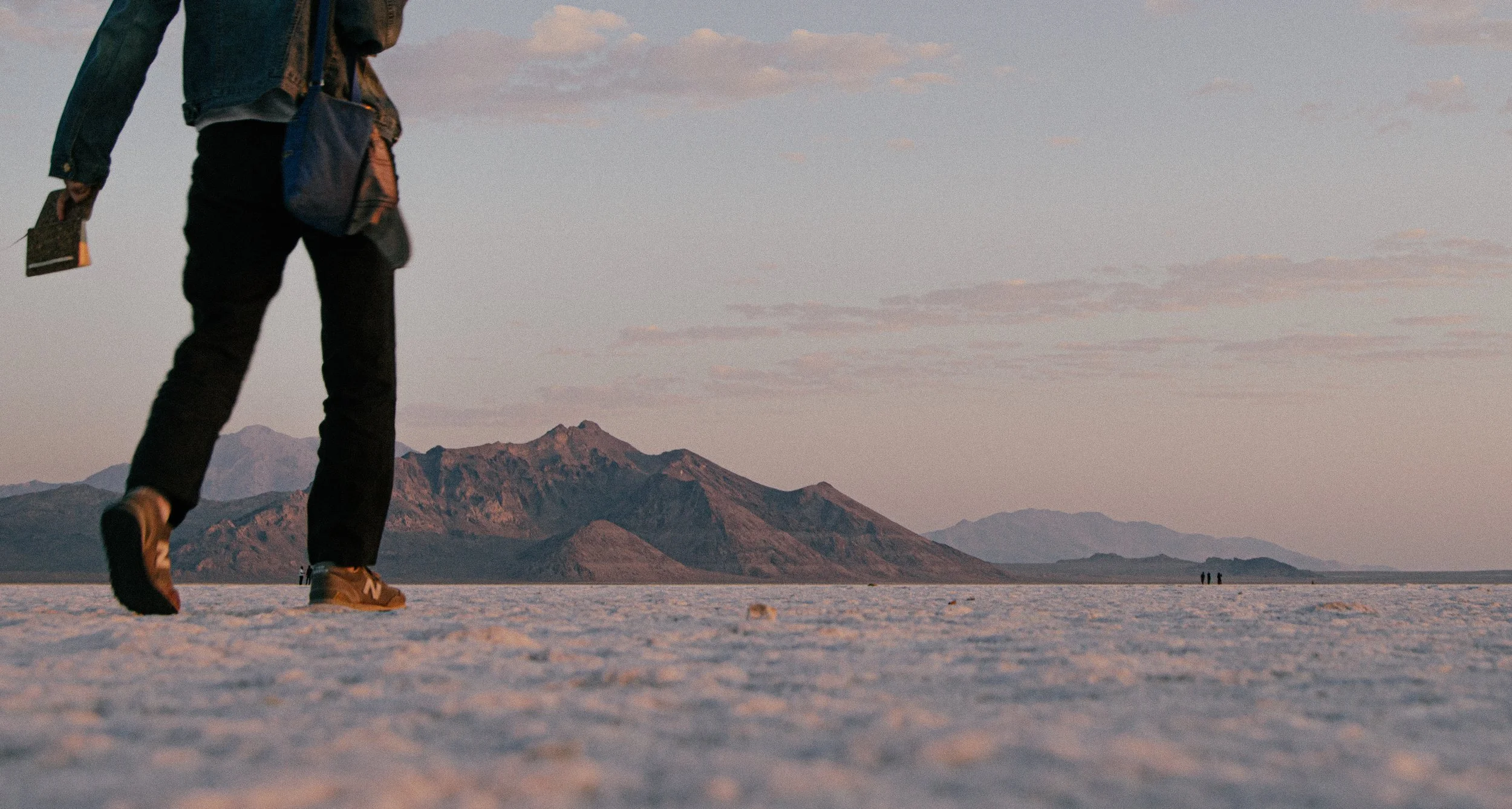
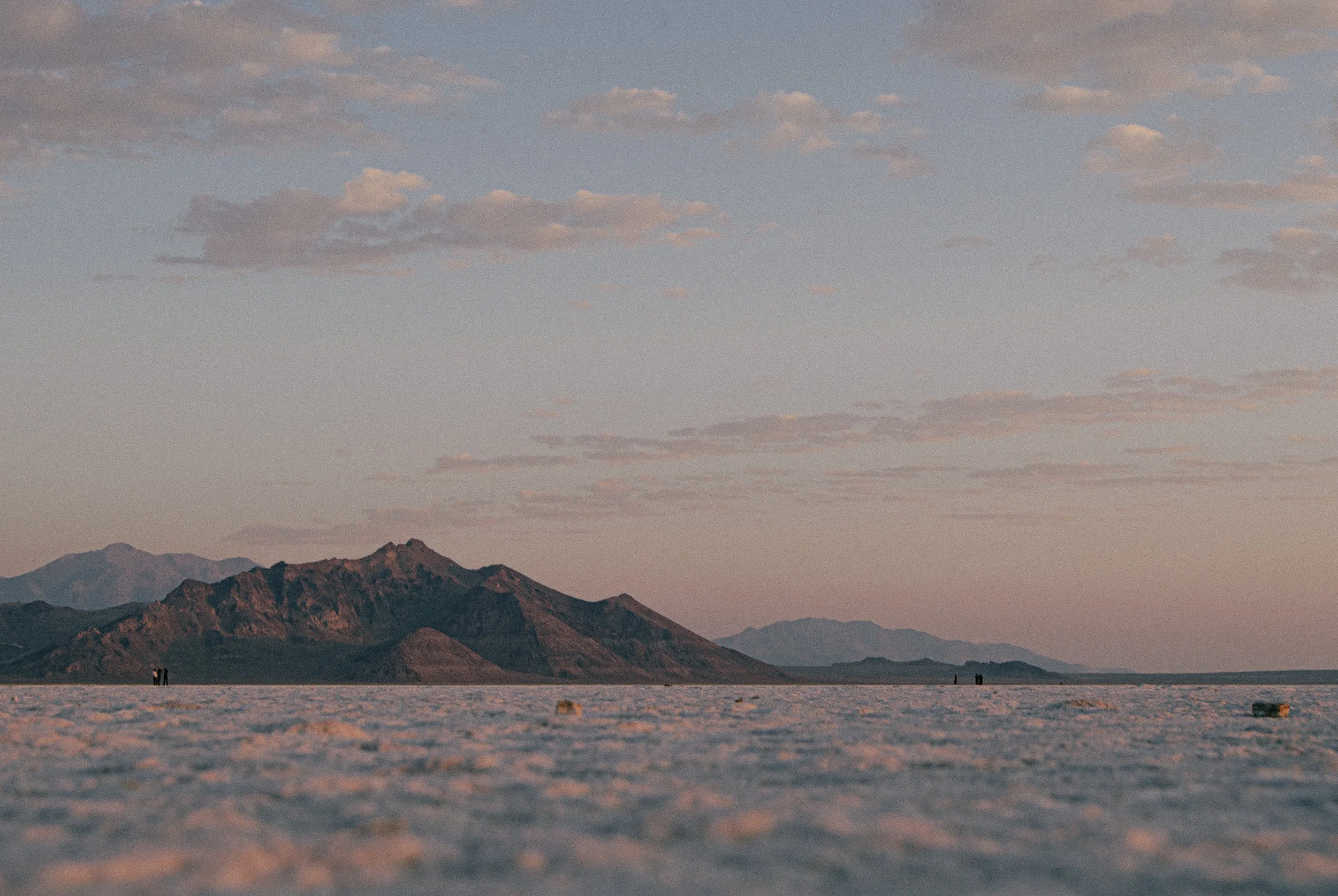
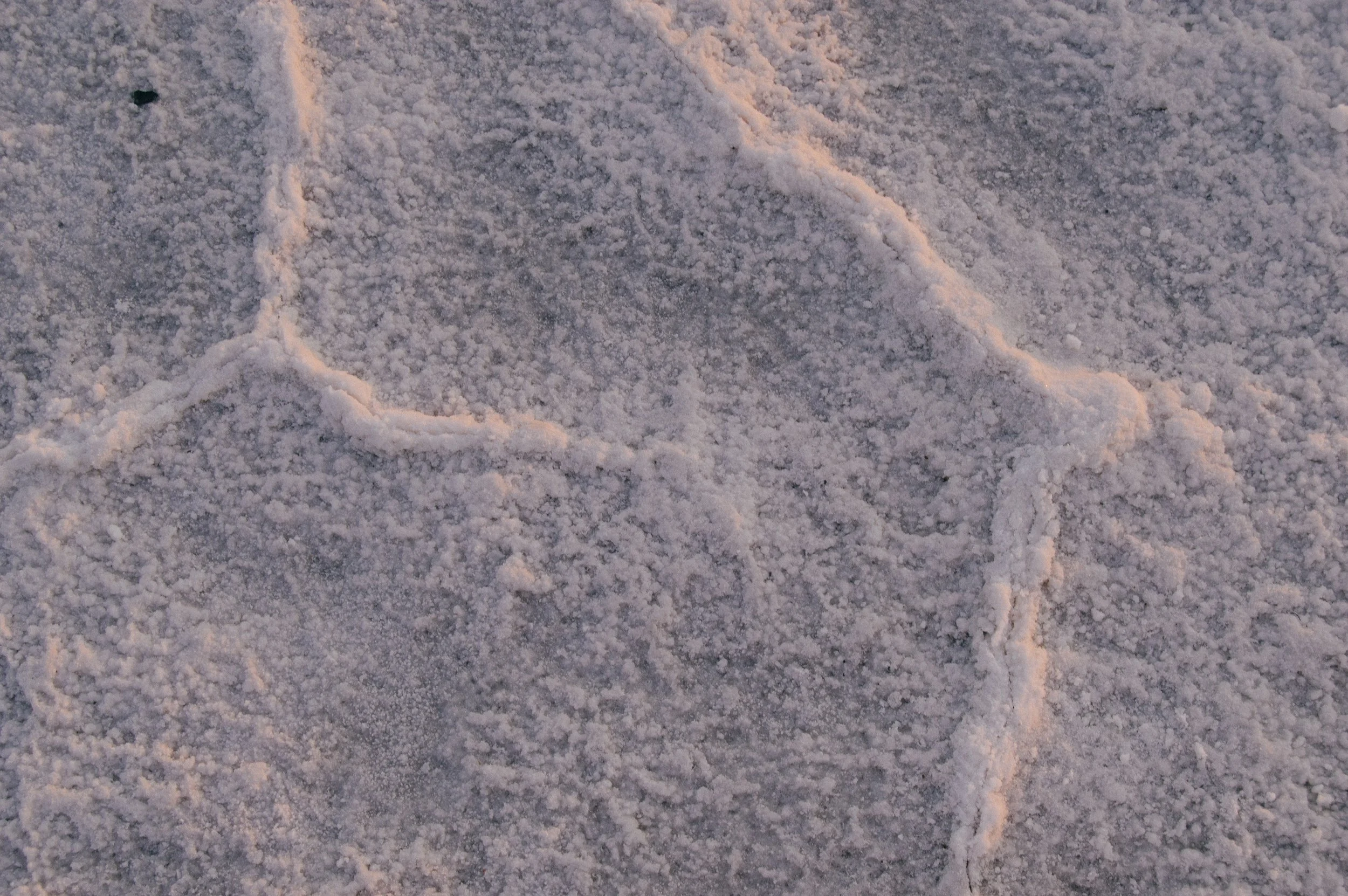
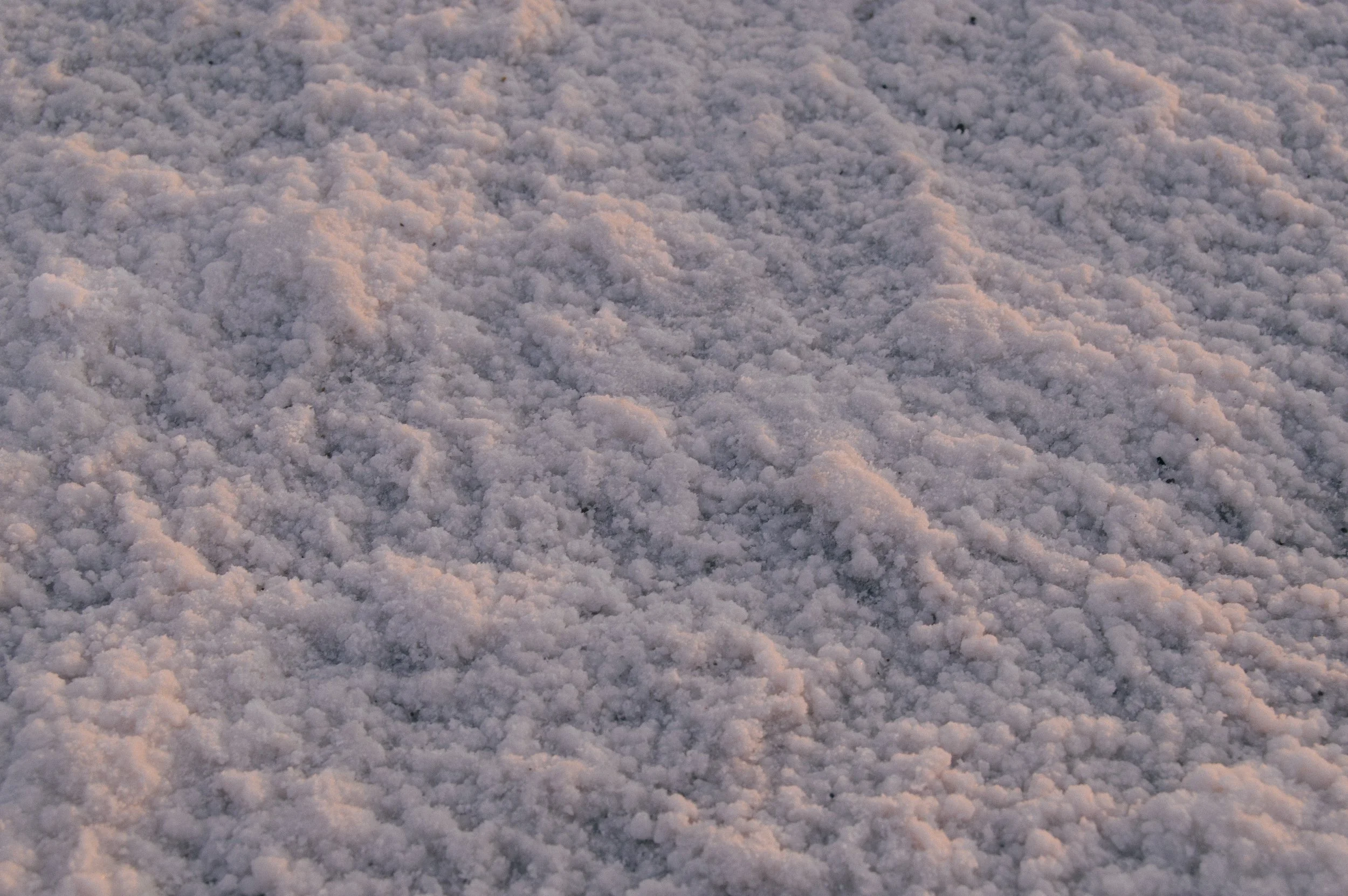
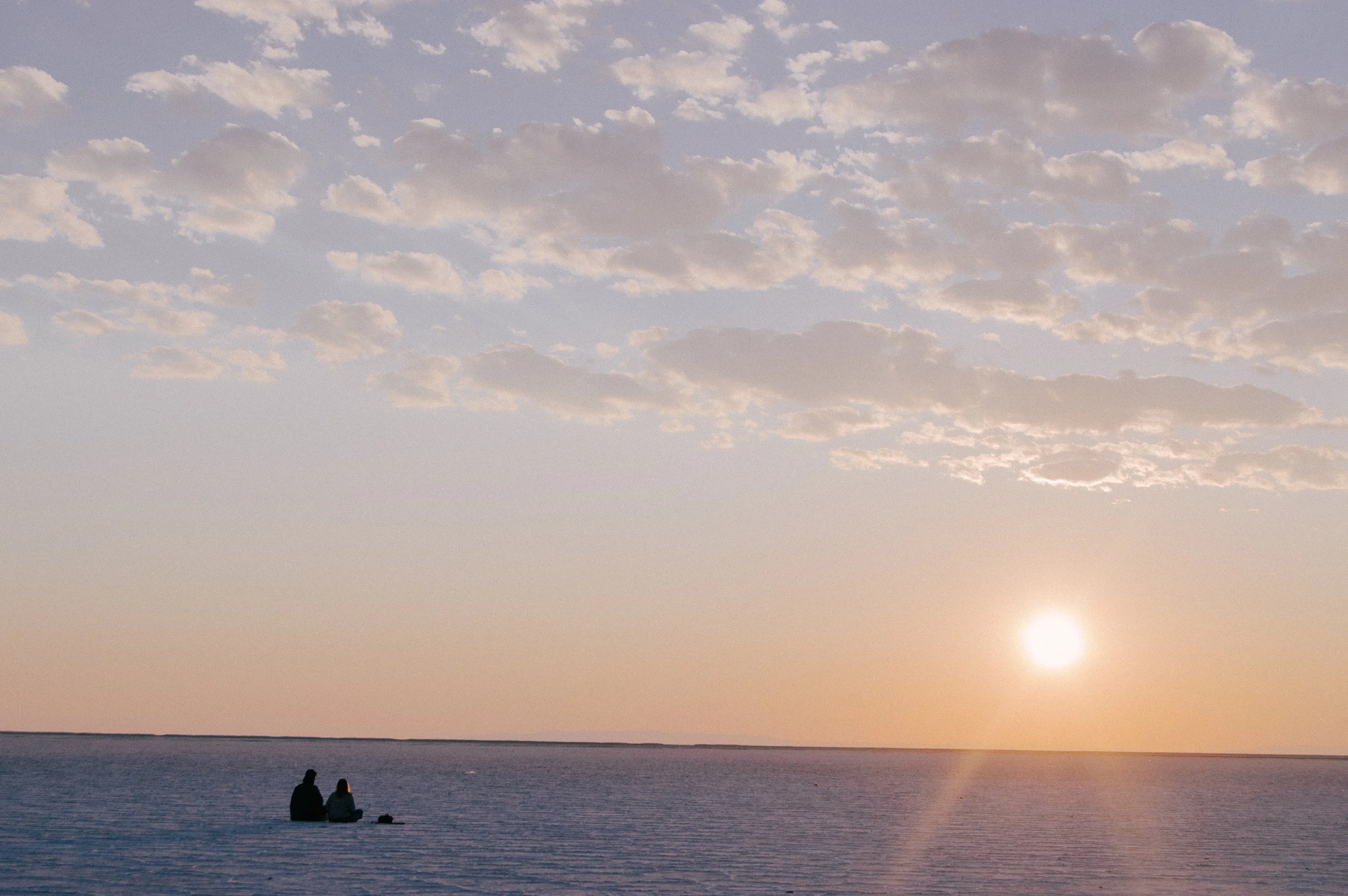
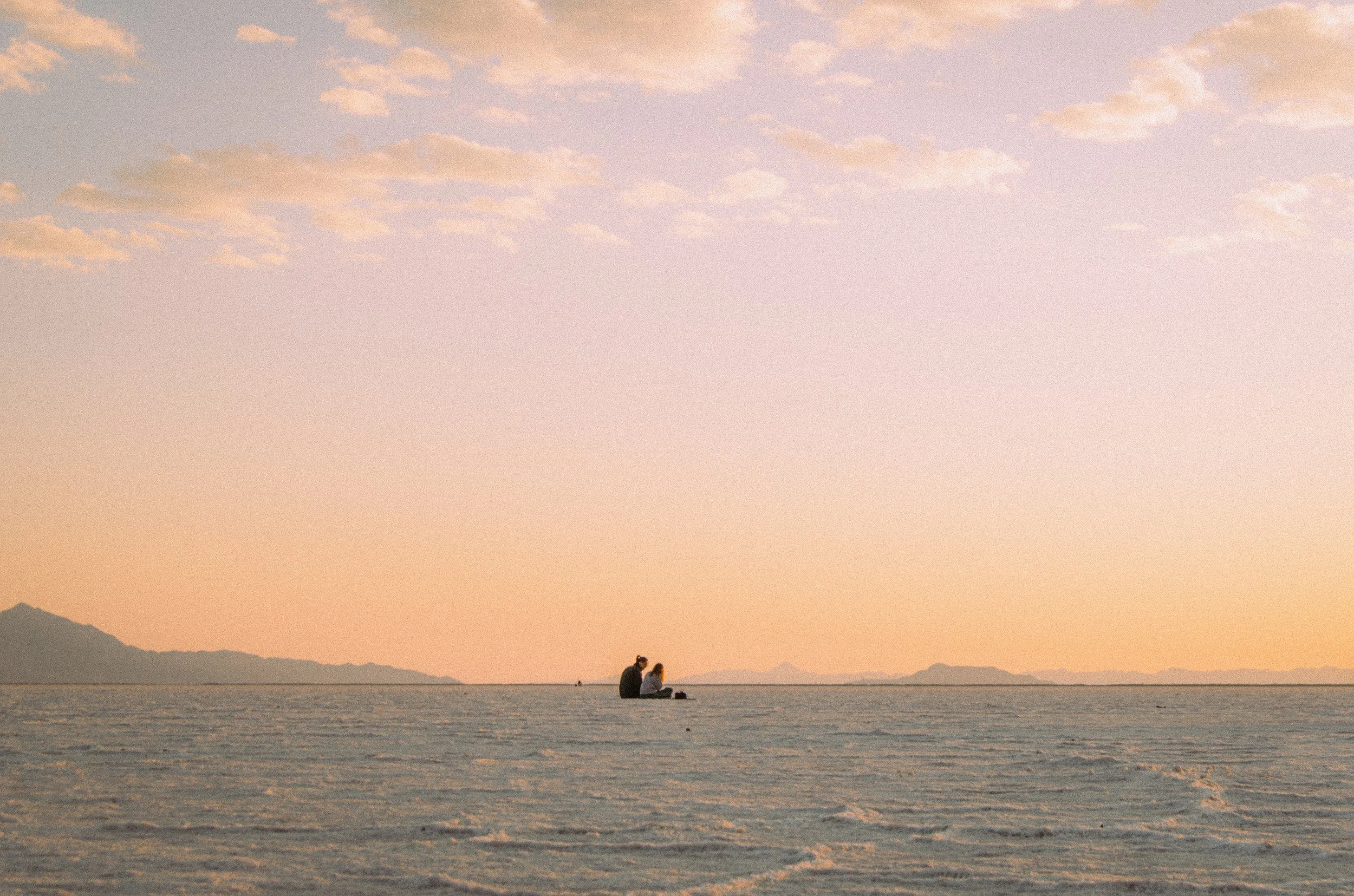
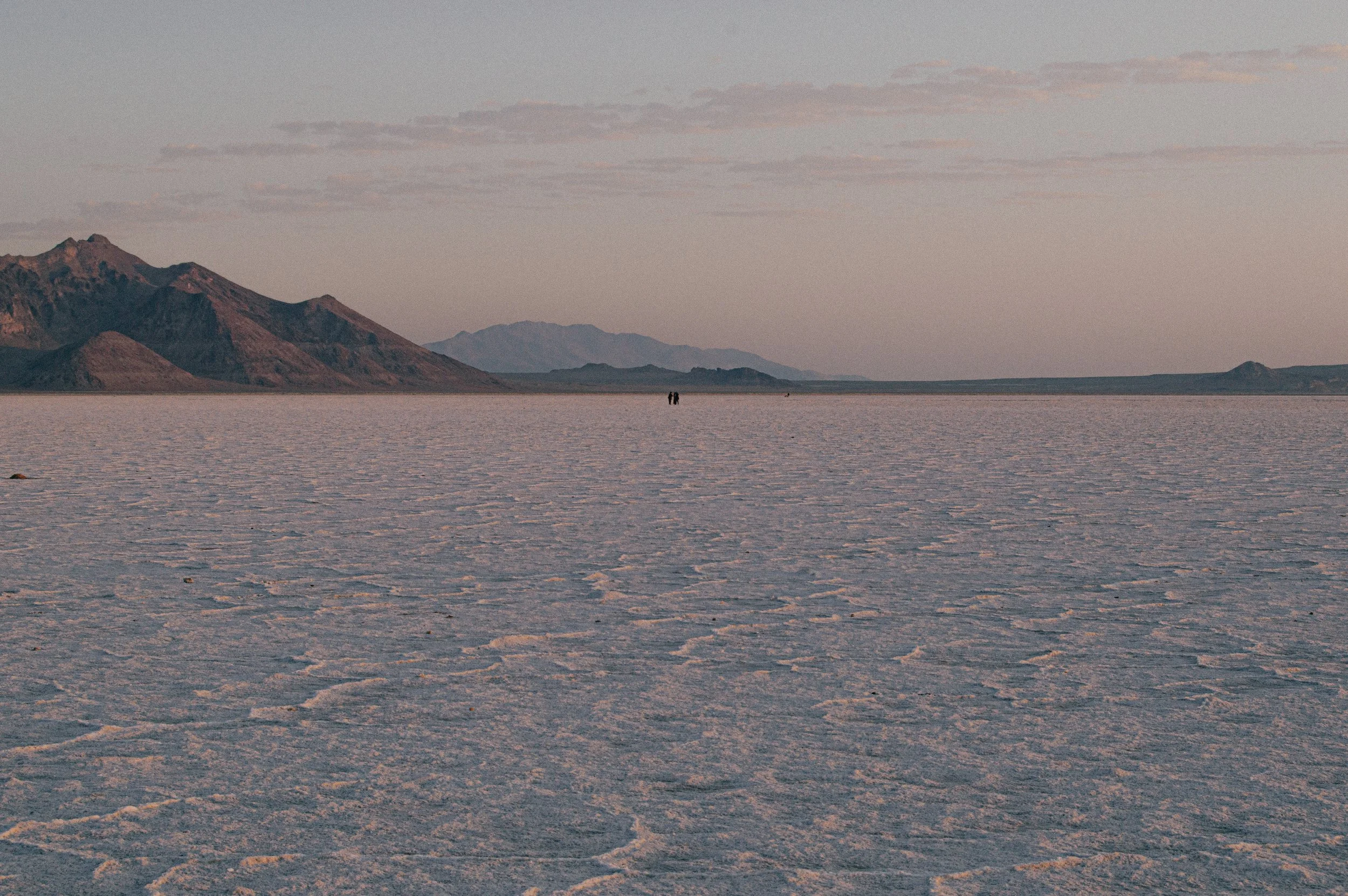
One hundred miles west and roughly twelve hours later, we stand on the same waves, the water long evaporated. The mosquitos have cleared away and the earth is covered with a carpet of dirty-white amorphous hexagons as far as the eye can see. The present mixes itself with memories past: I cannot help but think that I am standing on water. I thought that too, when I was just fourteen and standing on the salt flats of Badwater Basin in Death Valley. The past whispers to the present, two distinct natural monuments speaking to each other as friends, discovering their uncanny similarities.
Most importantly, the “just”s neglects the history and culture of native americans that inhabited and revered the Salt Lake. Tribes gathered duck eggs and insects for sustenance, and harvested salt from the lake to preserve dry meat during the cold winter months, according to Darren Parry, a Shoshone elder and former chairman of Northwestern Band of the Shoshone. Through the traditional ecological knowledge (TEK) shared by Indigenous Peoples across the US, salt is considered life too, and yet another gift provided by the Earth. Parry comments, “I was raised by a grandmother who spoke about water, land, plants, animals as kinfolk. She told me that I needed to treat that relationship just like I would a person, and so we honor the land. We honor the water.”
I think of my own grandmother – it is the summer and we sit around the dinner table. I ask my sister to pass me the salt. As she passes the shaker, she yanks it away just as my fingers brush its plastic body. The back-and-forth motion repeats a few times until she slams the shaker into the table before I can get a grip on it. To others, this motion may look silly, but we have avoided passing each other the salt directly to each other for as long as I can remember.
My grandmother, a witch to some and wise to all, would explain the dangers of directly passing someone the salt — as a mineral, the salt would absorb your negative energies and store them, releasing them only when it had been directly passed on.
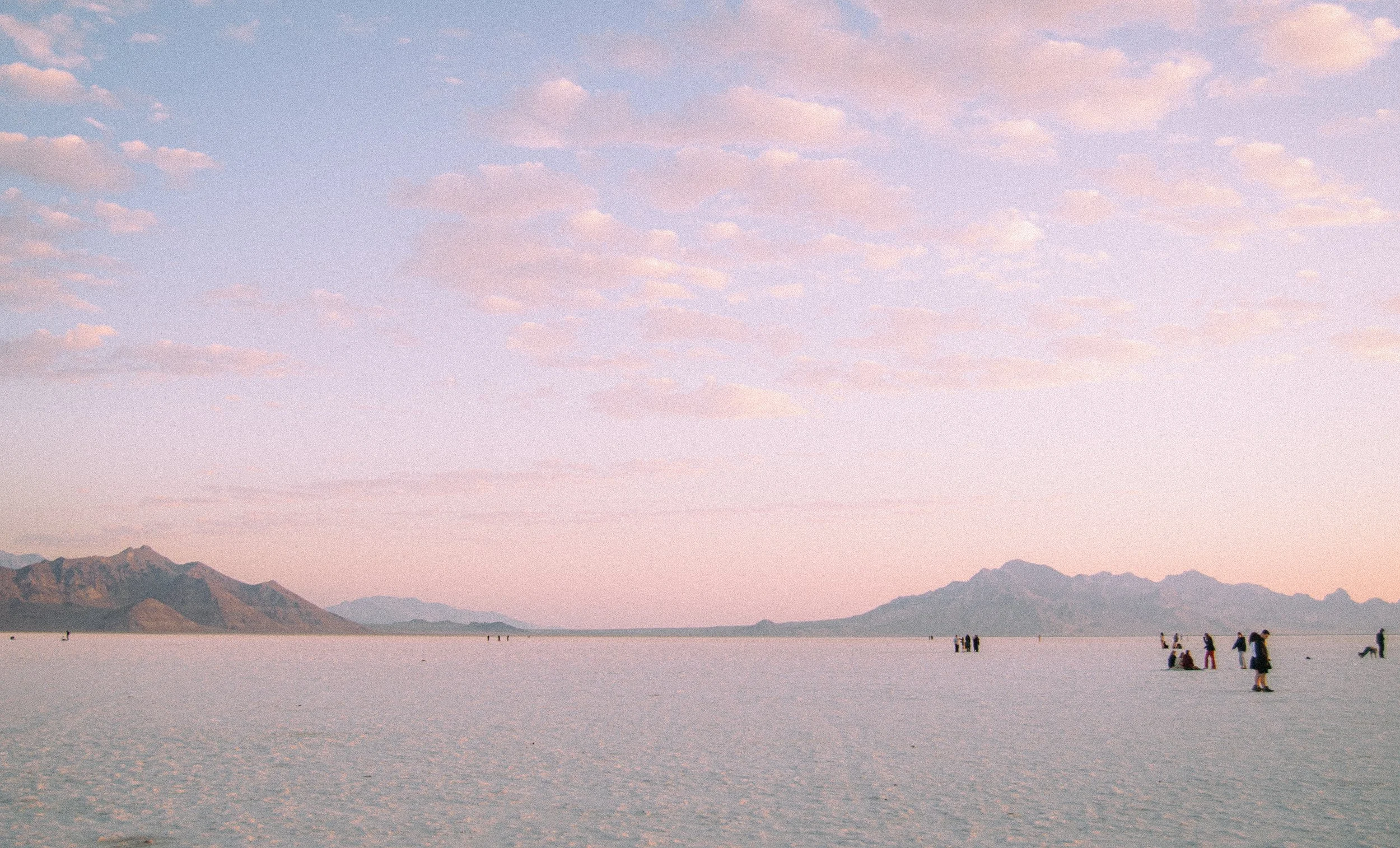
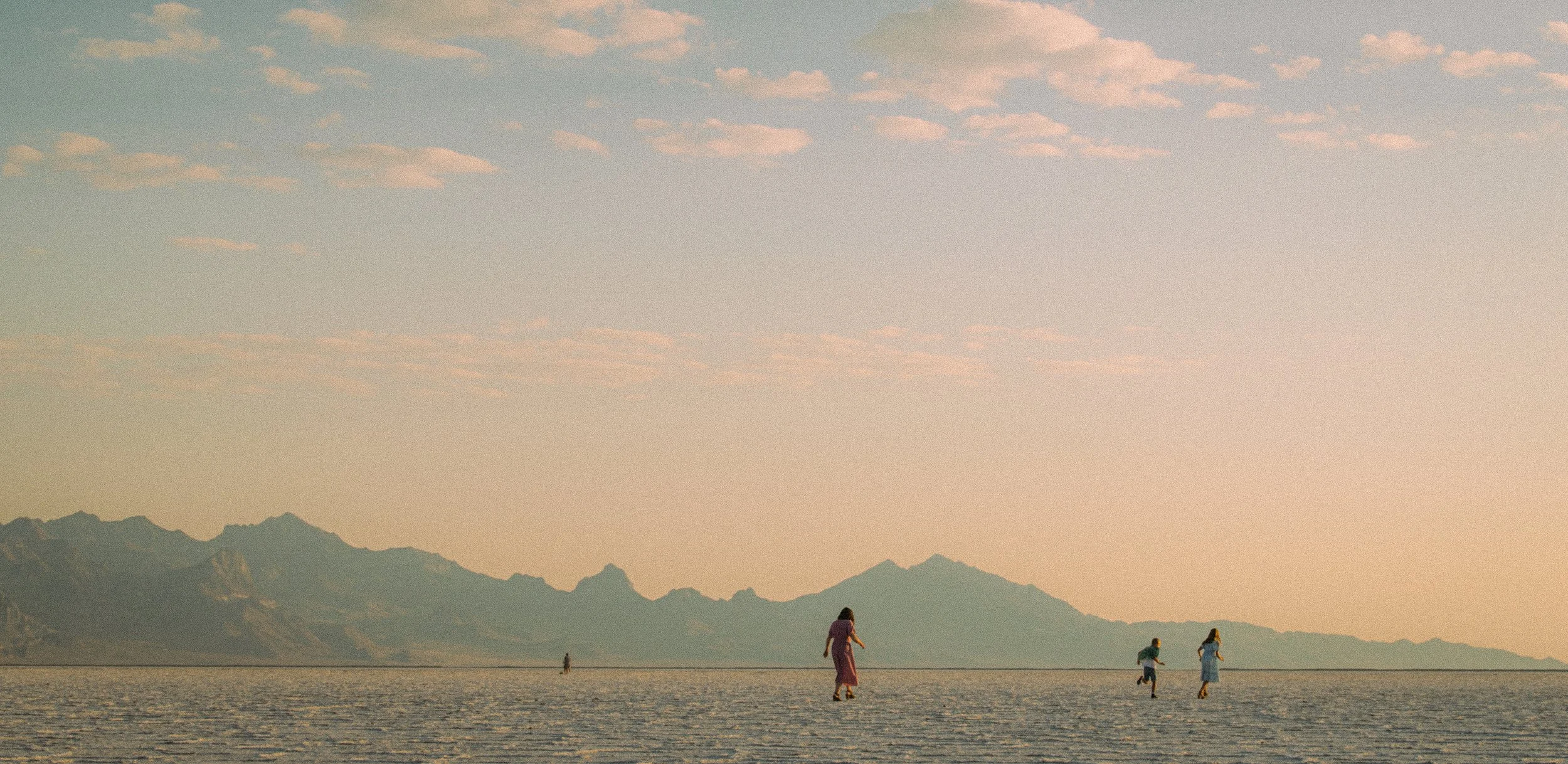
A few hundred meters away, standing brightly and colorfully against the white endlessness, there is a Mormon family dressed in matching formal-wear. The wife and daughter have identical dresses, light salmon and baby blue. The two sons and the husband wear nice plain-colored slacks and button down shirts.
“We’ve been living around Salt Lake City for nearly 15 years but it’s our first time here” the mother tells me with a great smile. “We just never really had the time to visit.” Next to us, her children fight for the control of the remote-controlled drone. It’s 7 AM and the sun rose a few minutes ago. “We just came to take a photoshoot.” Our conversation dies shortly after, but the shock of the numbers remains. Fifteen years ago a couple moved into Salt Lake City, and fifteen years later, an item gets checked off a top-fifteen-things-to-do-near-Salt-Lake-City list. As a traveler, this is confusing and I try to explain how visiting this touristic spot came to be missed. I think back to a conversation with a Mormon missionary at a local museum. “The last time I went to the lake must have been when I was nine.” He explains, “It’s just a barren wasteland.”
The “just”s of the two conversations stand out, devaluing and diminishing the beauty of Bonneville and its surrounding land both in its living and dead form. Barren has a feminine etymology, relating to childless, and wasteland gives the land a sense of unfitness, failing a standard of (feminine) beauty defined by illusion. Nonetheless, Antelope Island — the peninsula around the Great Salt Lake — is classified and protected as a state park, while the salt flats are regularly utilized for car racing. Even Andrew’s car entertained this tradition, speeding along the plains of crusted salt.
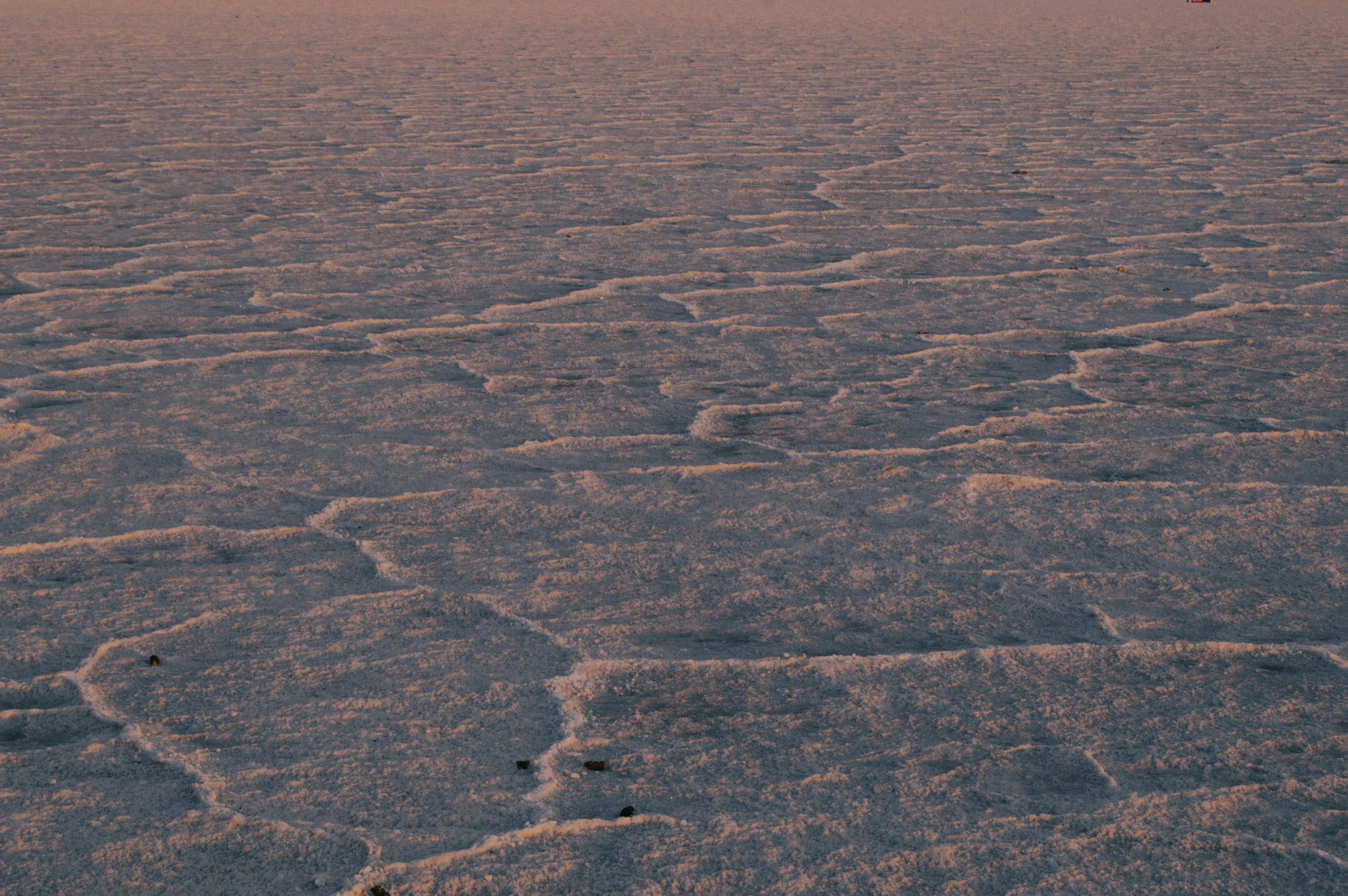
Chemists would tell a similar story with different vocabulary. Salts are typically side products, isolated and removed during reactions, “insoluble” we say, unable to follow the evaporated water molecules. The water: free; the salt: anchored down. Stuck, unable to change, abandoned, forgotten, the words that describe the salt’s position in a chemical reaction are bonded by their theme of negativity, and I imagine the supernatural energy associated with the mineral. From this position, the neglect of valuing the earth surrounding Salt Lake City is linked to its abundance in salt, the accumulation of negative energies that repels any possible connection to the land, producing the “barren wasteland.”
Nonetheless, we sit on the flats, below the mountainous range, the expansive clouds. We throw salt at each other and lick it off the ground, as if we were children. There is something innocent about the moment, I think, and I struggle to find anything negative about it at all. Perhaps my grandmother would have winced at our sight, categorizing the playful throws as intentional exchanges of salt/negativity, but I can’t help but smile when a grain touches my skin.
I traveled to a “barren wasteland” and somehow found my grandmother’s wisdom lying beside the overlooked history of the Shoshones of Utah and embedded within a plain of minerals that preserve the natural history of the lake. I depart, realizing that our salts, the things we are left with, scattered throughout our chaotic life, remain insoluble to change, preserving stories and wisdom for those who seek it out from its small crystalline structure.
——————————————————————————
Words: Julia Musumeci
Photos: Sylvie Lam, Hitiksha Bansal, Phillis Wan
Design: Vivian Xie